
A Brief Overview of the Saudi Arabian Legal System
By Dr. Abdullah F. Ansary*
Dr. Abdullah Ansary received his B.A. in Islamic legal studies in 1990 from King Abdul-Aziz University, Jeddah, Saudi Arabia. In 1997 he received his M.A. in Islamic Shari’ah with Honors from Umm al-Qura University, Makkah, Saudi Arabia. He taught Islamic Studies for several years at King Abdul-Aziz University. In 2000, he received his LL.M. degree from Harvard Law School and continued as a Visiting Researcher at Harvard Law School for the academic year 2000-2001. In 2005, Dr. Ansary received his Doctor of Juridical Science (S.J.D.) degree from the University of Virginia School of Law. Dr. Ansary provides legal consultancy and expertise to several branches of the U.S. government, commissions, federal courts, law firms and scholarly communities, and has been a member of several task forces charged with reviewing key issues related to homeland security.
Dr. Ansary gave several presentations and speeches on various issues within his practice area, and authored or co-authored several congressional reports, published articles, and papers on the law and/or practice of foreign jurisdictions, national security law and policy, anti-terrorism legislation, human rights, and Islamic law and legal systems in national and international journals and newspapers. His work has influenced countries’ legislation, executive policy, and judicial decisions. Dr. Ansary’s expertise lies in the fields of: national security law and policy, anti-terrorism legislations, human rights law, international law, and Islamic law and legal systems. He currently serves as a Senior Fellow at the Homeland Security Policy Institute (HSPI) of George Washington University, and a Senior Research Fellow at the Arabian Peninsula & Gulf Studies Program (APAG) of the University of Virginia.
Published July 2008
Table of Contents
- 1 Saudi Arabia: A General History
- 1.1 The Basic System
- 2 Authorities of the State
- 2.1 The Executive Branch
- 2.2 The Legislative (Regulatory) Branch
- 2.3 The Judicial Branch
- 2.3.1 Introduction
- 2.3.2 Current Saudi Arabian Courts System
- 2.3.2.1 Supreme Judicial Council
- 2.3.2.2 Courts of Appeals (Courts of Cassation)
- 2.3.2.3 First-Instance Courts
- 2.3.2.4 Summary Courts
- 2.3.3 The Board of Grievances
- 2.3.3.1 Board of Appeal Circuits
- 2.3.3.2 Appeal Circuits
- 2.3.3.3 First-Instance Circuits
- 2.3.4 Administrative Committees
- 2.3.5 Judicial System Reforms
- 2.3.5.1 The New Role of the Supreme Judicial Council
- 2.3.5.2 The New Courts System
- 2.3.5.3 High Court
- 2.3.5.4 Courts of Appeals
- 2.3.5.5 First-Degree Courts
- 2.3.6 Board of Grievances Reforms
- 2.3.6.1 High Administrative Court
- 2.3.6.2 Administrative Court of Appeals
- 2.3.6.3 Administrative Courts
- 2.3.7 Judges’ Qualifications, Job Performance, and Training
- 2.3.8 Judicial Independence
- 2.3.9 Sources of Law
- 3 Conclusion
- 4 Research Links
- 4.1 Internet Sources
- 4.1.1 Official Gazette
- 4.1.2 Law Sources (Official Websites)
- 4.1.3 Journals
- 4.1.4 Islamic Organizations
- 4.1.5 Law Sources (Unofficial Websites)
- 4.2 Government Links (Links to the Governmental Bodies’ Websites)
-
- 4.2.1 Ministries
- 4.2.2 Agencies
- 4.2.3 E-Government
- 4.2.4 Human Rights Websites
- 4.2.5 Nonprofit NGOs and Foundations
-
- 4.3 Sources of General Information
- 4.3.1 Newspapers
- 4.3.2 Education (General – Legal)
- 4.3.3 Libraries
- 4.4 Other Links (Miscellaneous)
- 4.1 Internet Sources
- 5 Endnotes
1. Saudi Arabia: A General History
In 1924, Abdul-Aziz ibn Sa’ud—the founder and first King of Saudi Arabia (1932-1953)—took control of the Hijaz (the Western Province of Saudi Arabia), ending a long series of battles to consolidate and unite a vast but fragmented territory. Abdul-Aziz had his eyes on implementing a nation building process which would fit the needs and aspirations of the people while growing alongside their assessment of what would best serve the nation and its citizens.[1] He realized that Islam provided the only way to realize this long-sought future, reflecting its deep significance to the culture and history of the Arabian Peninsula, and the feelings of its inhabitants. National unity was realized because Abdul-Aziz applied the doctrine of Islam to public policy, justice, and all other fields of life. He succeeded not only in unifying the country, but also in proving the credibility of the Islamic solution and demonstrating its validity for his time and all times.
Abdul-Aziz focused gradually on transforming a simple administrative structure into a series of well-defined and well-organized institutions which administered and assisted the executive authority in managing the affairs of an expanding territory. Focusing on the needs of his people, Abdul-Aziz took the first steps toward inaugurating a system of governance and implementing the Islamic-based principle of consultation, as presented by the Qur’an (Islam’s Holy Book) and authentic Sunnah (Prophet Traditions).[2] In 1924, the “National Council” (al-Majlis al-Ahli), a consultative council introduced by Abdul-Aziz, began to take on powers, except for foreign and military affairs, which were handled by the King. By August 1925, the “Makkah Consultative Council,” having greater powers, was formed. This new council was responsible for overseeing communication, trade, education, the court system, internal security, and municipal affairs. It was also the center of the General Consultative Council, which played a significant role in the creation of the Council of Ministers.
In August 1926, Abdul-Aziz approved a comprehensive constitution that was called the Basic Regulation (al-Talimat al-Assasiah) for the province of Hijaz. The document was in line with the constitutions of many modern states and may also be regarded as the precursor for future ones. The Hijaz Constitution consisted of nine sections and seventy-nine articles, which dealt with core constitutional issues such as the System of Government, the Administration’s Responsibility, the Affairs of the Hijazi Kingdom, the Department of Accounts, the Inspectorate General, the Kingdom’s Employees, the General Municipal Councils, and the Municipal Administration Committees. Most importantly, the fourth article of this document established several governmental bodies, which included the Consultative Council, Administrative Councils, District Councils, and Village and Tribal Councils.[3]
In 1927, the “Commission on Inspection and Reform,” a committee which was tasked with reviewing the administrative system, was formed by order of Abdul-Aziz. Recommending courses of action for administrative reform, the commission sent a proposal for a new statute of the Consultative Council that was approved by Abdul-Aziz in July 1927. This new Consultative Council oversaw informing the government about any errors in the application of laws and statutes. Furthermore, it was responsible for conducting work in various areas, which included budgets, construction project concessions and licenses, expropriation of public property, employment of foreign nationals, and law and statute legislation.[4]
Due to the complexities of modernity, Abdul-Aziz approved the Commission on Inspection and Reform’s recommendations, and the Council of Deputies (Majlis al-Wukala) was created in January 1932. The Council of Deputies functioned for twenty-three years. It served like a small council of ministers for the Hijaz, until the creation of the council of Ministers in 1953, which brought all the provinces of the Kingdom under its own jurisdiction.[5] In September 1932, the Kingdom was united as the Kingdom of Saudi Arabia. This major step brought all Saudi Arabian citizens under the umbrella of a unified constitutional and administrative system, all while allowing for the completion of new structures for the Kingdom.
The discovery of oil in the Eastern Province in the 1930s coupled with the increasing complexity of government affairs rendered the old type of administration inadequate.[6] For the advancement of a new administrative organization, several ministries were created, including the Ministry of Foreign Affairs (1930), the Ministry of Finance (1932), the Ministry of Defense (1944), the Ministry of the Interior, and the Ministry of Communication (1953). This new state successfully established diplomatic relations based on political representation; it also appointed ambassadors.[7] In addition, a number of centralized departments were founded which eventually paved the way for the establishment of the Council of Ministers.[8]
In October 1953, King Abdul-Aziz announced the establishment of the Council of Ministers. Furthering his father’s efforts, King Sa’ud ibn Abdul-Aziz (1953-1964) held the first session of the Council of Ministers in March, 1954. At the time of its foundation, the Council of Ministers served as an advisory body to the King. By 1958, Faisal ibn Abdul-Aziz, Crown Prince and Prime Minister, transformed the Council of Ministers into a legislative, executive, and administrative body with decision-making abilities. Most of the constitutional basics in the Kingdom were embedded in the Law of the Council of Ministers. Between 1959 and 1960, Faisal made a serious attempt to introduce modern constitutionalism into the Kingdom; however, this attempt did not go beyond the proposal phase. However, many of the country’s government ministries, agencies and welfare administrations were developed during King Fisal’s reign (1964-1975); the Ministry of Justice is a case in point, having been established by King Faisal in 1970.[9]
During the 1980s, the Council of Ministers regulated policies for the Kingdom while also formulating state policy regarding both domestic and foreign affairs. It also led in the execution of policies related to the national economy, education, social welfare, and most public affairs. Focusing on the needs of the Saudi citizens, Saudi governmental agencies experienced a great deal of expansion during the 1980s. During the reign of King Khalid ibn Abdul-Aziz (1975 – 1982), a committee was formed to prepare a new constitution.[10]
Through consultation and a constant awareness of the people’s needs and aspirations, King Fahad ibn Abdul-Aziz (1982 – 2005) initiated the evolution of Saudi Arabia’s constitution. On March 1, 1992, King Fahad announced three fundamental laws, established by Royal Orders, which changed the domestic political environment:
- The Basic System of Governance (hereinafter the Basic System);
- The Consultative Council Law; and,
- The Regional Law.[11]
The political reforms of the 1990s expanded the domain of Saudi Arabian democratic values to the areas of decision making and checks and balances. Several Royal Orders have been issued amending these constitutional documents, including the Council of Ministers Law, in order to coincide with Saudi Arabia’s constitutional evolution—a change examined with greater detail in the following sections. These fundamental laws and their amendments improved participation in government on the part of the citizenry, while recognizing the role played by civil and political rights—and public participation—in government.[12]
The legitimacy of the Al-Sa’ud monarchy did not only emerge from its adherence to the constitutional, Islamic-based principle of consultation; it also derived from the relatively smooth transitions in kingship which stemmed from King Abdul-Aziz’s truly significant decision to implement the concept of allegiance (Bay’ah) established by the Shari’ah and sanctioned by tradition. The Basic System of 1992 introduced provisions regulating the succession process.[13] On August 1, 2005, then-Crown Prince Abdullah ibn Abdul-Aziz was proclaimed King of the Kingdom of Saudi Arabia, thereby succeeding King Fahd. The recent positive transition of power to King Abdullah from the late King Fahd was an indication that the Kingdom will continue to flourish, as it has since the founding of the modern state.
Issuing a Royal Order that formed the “Allegiance Council” in October 2006, King Abdullah further stabilized the country and institutionalized the method by which the Royal Family’s succession is determined.[14] This landmark law was a major development in terms of constitutional and legal reform, indicating the scope of the Kingdom’s democratization and modernization. The law thus helped to develop Saudi Arabia at the state level while also improving its society.[15] To cope with the needs of the rapidly developing Kingdom, King Abdullah is adopting an extensive reform plan that addresses the key areas of good governance, political reform, women’s rights, judicial reform, economic reform and educational reform. This will play an important role in Saudi Arabia’s constitutional and administrative evolution.
1.1. The Basic System
The Basic System is the most important constitutional document of the three fundamental laws inaugurated in 1992. It specifically states that the Qur’an and the Sunnah of the Prophet Muhammad are the Kingdom’s constitution.[16] Article 7 of the Basic System reaffirms Islamic Shari’ah (Islamic Religious Law) as the foundation of the Kingdom, stating that the government draws its authority from the Qur’an and the Sunnah, and that these two sources govern all administrative regulations of the state.[17] It emphasizes that the state’s role and objective is to protect the principles of Islam and to enforce its Shari’ah.[18] The document is guided by Islamic law when defining the nature, the objectives, and the responsibilities of the State, as well as in defining the relationship between the ruler and the ruled based on brotherhood, consultation, friendship and cooperation.[19]
The Basic System’s significance emerges when considering its similarity to the constitutions of other countries in terms of content. It confirms the monarchial system of the land,[20] and reaffirms the following principles of government: justice, consultation, and the equality of citizens under Islamic Shari’ah.[21] It emphasizes the basic features of the Saudi family and the importance of Islamic values, justice, and the unity of the family.[22] In addition, the Basic System’s articles on economic principles, rights and duties stress that the State must protect human rights according to the Islamic Shari’ah,[23] guard the Kingdom’s sacrosanct public funds,[24] affirm the sanctity of private homes and private communications,[25] and guarantee the protection of private property[26] and individual freedom from arbitrary arrest and punishment, except in cases of legal due process.[27] It obliges the state to provide health care to every citizen, support those “in situations of emergency, sickness and old age,”[28] and enact laws to protect the worker and the employer.[29]
2. Authorities of the State
The Basic System provides detailed definitions of each state authority, including: the judicial authority, the executive authority and the legislative authority. It also addresses their interrelationships.[30] However, there is no separation between the authorities, especially between the legislative and the executive.[31]
2.1. The Executive Branch
The executive branch of the Kingdom consists of the King, the Council of Ministers, local governments, ministry subsidiaries, and other public, independent and quasi-independent agencies.
The King has ultimate authority over the executive branch, the reference point for all authority;[32] he is also the supreme commander of all military forces.[33] According to Article 55 of the Basic System, the King carries out the policy of the nation in accordance with the provisions of Islam. He oversees the implementation of Islamic Shari’ah, Saudi Arabian statutory laws, regulations and resolutions, along with the nation’s system of government and the state’s general policies.[34] In times of emergency, the King is granted extraordinary powers which allow him to take urgent measures and implement those regulations deemed necessary to deal with a state crisis.[35] In addition, the King functions similarly to a prime minister,[36] with the power to appoint and relieve ministers.[37] He supervises the Council of Ministers, the ministries and the governmental agencies. He also directs general state policy, provides guidance to various governmental agencies, and assures for the harmony, continuity, and unity of the Council of Ministers.[38]
Headed by the Prime Minister (the King), the Council of Ministers is the direct executive authority in the Kingdom. The Council of Ministers has the power to set down the nation’s internal, external, financial, economic, educational, and defense policies. It serves the same role regarding the general affairs of the State, all while supervising their implementation. It has final authority over the executive and administrative affairs of all ministries and other government agencies.[39] It also has the authority to monitor the implementation of laws, regulations and resolutions, at once establishing and organizing public institutions while simultaneously following up on the implementation of general development plans.[40]
In addition, the Council of Ministers has the power to set up committees which review the conduct of the ministries, other governmental agencies or any specific case which might be brought to its attention.[41] Several Higher Councils and Committees have been established, “to deal with particular issues that fall within the Council of Ministers functions in laying down the policy of the state. The competence of each Council, its members and the nature of its decisions are always defined by its respective and establishing decree.”[42] Examples of these Councils and Committees include: the Supreme Council of Higher Education, the Supreme Council of Islamic Affairs, the National Security Council, and the Higher Committee for Administrative reform. The composition and authority of these councils and committees are defined by their establishing decrees.
Local governments, branches of ministries and other public agencies in the Kingdom’s different regions are considered to be parts of the executive branch. The Regional Law divides the country into several regions which are subordinate to the central government and accountable to the Minister of the Interior.[43] The Regional Law declares that the goal in dividing the country into several regions is to improve the level of administrative work and development, maintain security and order, and guarantee the rights and liberties of citizens in the framework of the Islamic Shari’ah.[44] This indicates that the regions enjoy considerable financial and administrative independence. Taken together, this demonstrates a major effort aimed at decentralizing authority in the Kingdom.
Finally, various independent and quasi-independent administrative agencies have been established to address the social, economic and administrative challenges which have been facing the Kingdom since its establishment. These agencies vary widely in their function, structure and power, each of which is defined by the agency’s establishing decree. They can be classified as:
- Economic agencies (e.g., the Petroleum and Minerals Administration, Saudi Arabian Airlines, and the Royal Commission for Jubail and Yanbu);
- Educational training and consulting agencies (e.g., the Institute of Public Administration, the Technical Education and Vocational Training, and the Saudi Public Universities);
- Social welfare agencies (e.g., the Pension Services Agency, the Saudi Red Crescent, and the Social Security Administration); and,
- Investment and financial agencies (e.g., the Saudi Arabian Monetary Fund, the Saudi Arabian Agricultural Bank, the Real Estate Development Bank, and the Saudi Fund for Industrial Development).
Most of these agencies are under direct supervision of particular ministries or government agencies.[45]
2.2. The Legislative (Regulatory) Branch
Islamic Shari’ah, derived from the Qur’an and the Sunnah, forms the basis of Saudi Arabia’s legal system. The Basic System used the term “regulatory authority” to refer to the Kingdom’s legislative authority, which is entitled to lay down statutory laws and regulations. It also has authority to approve international treaties, agreements, regulations and concessions. In Islamic Shari’ah, only God can legislate; thus, the word “legislation”—which represents secular law—is not used in the Kingdom. The legislative authority is shared by the King, the Council of Ministers, and the Consultative Council (Majlis al-Shura).[46]
The Basic System declares that Islamic Shari’ah, divine in origin, is the basis of legislation. In addition to the rules of the Islamic Shari’ah, there are a vast range of statutory laws enacted in criminal, administrative, and commercial areas which correspond to the Kingdom’s development. The King occupies an essential legislative role in support of Shari’ah rule.[47] As the enforcer of divine law, the head of the Islamic state is granted broad discretion over matters of public interest—known as the field of Islamic public policy (al-Siyasah al-Shar’iyyah).[48] Public interest (al-Maslahah al-Mursalah) is one of the main areas in which Islamic governments (e.g., Saudi Arabia) deal with the comprehensive development of the country. State regulations are lawful and enforceable as long as they do not contravene divine law. The Saudi Basic System clearly relies on al-Maslahah al-Mursalah as a basis for rulemaking. This right is exercised only where there is no clear text present in Islamic law which could regulate a given issue.[49] The Basic System asserts that, “[t]he regulatory authority lays down regulations and motions to meet the interests of the state or remove what is bad in its affairs, in accordance with the Islamic Shari’ah. This authority exercises its functions in accordance with this law and the laws pertaining to the Council of Ministers and the Consultative Council.”[50]
The King in Saudi Arabia has a major and independent rulemaking function. The Basic System identifies the King as the ultimate authority over all state authorities, including the legislative authority.[51] He has the authority, as the Head of State and the Head of the Council of Ministers, to repeal, enact, or amend any laws and regulations by Royal Order.[52] In addition, the legislative process, which include the drafting and enactment of international treaties, agreements, regulations and concessions are approved and amended by Royal Decrees after first being reviewed by the Kingdom’s legislative bodies (the Council of Ministers and the Shura Council).[53] The King is free to accept and reject proposals from either of the two legislative bodies.
The Council of Ministers simultaneously undertakes both executive and legislative functions.[54] It shares the legislative function with the King[55] and the Shura Council.[56] Each minister has the right to propose a draft law or regulation related to the affairs of his ministry.[57] To consider a proposal approved by the Council of Ministers, two-thirds of those members who are in attendance must agree to adopt it. In exceptional cases, meetings of the Council of Ministers may be considered valid if only half of the members are in attendance. In such cases, however, resolutions should not be considered legal without the approval of at least two-thirds of those members who are in attendance.[58] More importantly, the decisions of the Council of Ministers, including those related to the approval of legislative proposals and amendments, are not considered to be final unless the King approves them.[59]
Legislative authority is also shared by the Shura Council. In 1992, the Basic System mandated the establishment of a Consultative Council.[60] In its new form, the Shura Council is an institution intended to exercise oversight functions, allow citizens to participate directly in the administration and planning of country policies, monitor the performance of its agencies, and open up the Saudi decision-making process to greater public scrutiny and accountability.[61] According to the Shura Council Law, every four years the King issues a Royal Decree that marks the beginning of a new term for the Shura Council.[62] The Council is composed of a Chairman and one hundred fifty (previously one hundred twenty) members. The King chooses the Shura Council members from among scholars and men of learning.[63] Fifty percent of the Council’s membership must be replaced by newly selected members every four years.[64] Members of the Shura Council may not hold any other governmental or private management position unless permitted by the King.[65]
The Shura Council provides opinions regarding public policy if asked by the King, acting as the Head of the Council of Ministers. The Council has a wide mandate to comment on state affairs, including: the general plan of economic and social development; international laws, charters, treaties, agreements and concessions; the interpretation of state laws; and annual reports submitted by ministries and other governmental bodies.[66] The Shura Council has specialized committees, staffed by its members, which exercise those powers which are within its jurisdiction.[67] Most importantly, the Shura Council has the jurisdiction to propose a draft of a new law or an amendment of an enacted law and study them within the council. The Council Speaker submits Council resolutions regarding new or amended laws to the King.[68] Unlike the decisions of the Council of Ministers, two-thirds of the Shura Council’s members must approve a legislative proposal or amendment for it to be adopted. Resolutions are not considered valid without majority approval from the Council’s members.[69]
The opinions of the Shura Council are subject to review by the King, who decides which resolutions will be referred to the Council of Ministers. If the views of both the Shura Council and the Cabinet are in agreement, the resolutions are issued once the King has granted his approval. Every legislative proposal or amendment which becomes law must be approved by the two Councils and the King. If the views of either Council vary, the issue is returned to the Shura Council, which delivers whatever decision it deems appropriate. The new resolution is then sent to the King, who renders the final decision.[70]
In the final stages of the enactment of any statutory law, the Council of Ministers considers the resolution issued by the Shura Council and reviews the minutes that have been prepared by the Bureau of Experts at the Council of Ministers, all while taking into account whether any recommendations were issued by the General Committee of the Council of Ministers. If the Council of Ministers accepts the Shura Council proposal, the Council of Ministers will approve the legislation and the Council’s General Secretaries will prepare a Royal Decree sanctioning its approval. The Royal Decree will approve the legislation and will call on the president of the Council of Ministries, along with the Ministries under their respective jurisdictions, to implement the decree in question. The Council of Ministers’ Presidency Chambers will issue a circular so as to distribute copies of the Decree, after which the legislation will be distributed to the concerned ministries and departments, including the Shura Council.
If necessary, the Secretary General of the Council of Ministers (the Council of Ministers’ Presidency Chambers) may issue a letter to the concerned Minister to set rules for the implementation of whatever regulations were contained within the new statutory law. These rules will be approved for a final time by the Council of Ministers. The statutory law will be published in the Official Gazette (Umm al-Qura) and be implemented on expiration of a specified period (usually by the last article of the legislation) after it has been published. The original and authenticated copy of the enacted legislation will be forwarded to the Information and Studies Center affiliated with the Council of Ministers’ Presidency Chamber. The National Center for Documents and Archives, affiliated with the Council of Ministers, will then publish the new legislation in the Official Gazette.
It is important to note that in the process of enacting any legislation, the legislative authority must take into consideration the following factors: the legislation must not conflict with the clear text of the Qur’an or valid Sunnah. They are the Kingdom’s constitution, and take precedence over all other regulations, including the Basic System.[71] In addition, proposed legislation must comply with the provisions of the Fundamental Laws (e.g. the Basic System). Finally, the legislative authority must lay down regulations and motions which meet the interests of the state and remove whatever might be detrimental to state affairs—all in accordance with Islamic Shari’ah.[72]
2.2.1. Advisory Authorities (The Senior Council of Ulama)
The Board of Senior Ulama heads the religious authority in Saudi Arabia. It is an official body comprised of thirty to forty of the Kingdom’s most senior scholars, created in 1971 to provide fatwas on issues either submitted to it by the government or otherwise requiring the establishment of general rules.[73] The Basic System recognizes the existence of the Board. It states that, “[t]he source for fatwa (religious legal opinion) in the Kingdom of Saudi Arabia shall be the Book of God and the Sunnah of his Messenger. The Law shall set forth the hierarchy and jurisdiction of the Board of Senior Ulama and the Department of Religious Research and Fatwa.”[74] Although it is not part of the legislative authority, the Board of the Senior Ulama has been a participant in the legislative process responsible for enacting statutory laws. In many cases, its participation has been crucial in gaining public support for said statutory laws.[75] Similar bodies, though with a more academic composition and function, exist on the regional level. These include the Islamic Fiqh Academy at the Muslim World League, sponsored by Saudi Arabia and located in Makkah, and the International Islamic Fiqh Academy Organization of the Islamic Conference, which has its seat in Jeddah.
2.3. The Judicial Branch
2.3.1. Introduction
The current Saudi court system is composed of a Supreme Judicial Council, Courts of Appeals, and First-Instance Courts (General Courts and Summary Courts). Saudi Arabia also has an administrative judicial body known as the Board of Grievances which stands alongside the Courts System and is affiliated directly with the King. The board judicial function is carried out through Board of Appeal Circuits, Circuits of Appeals, and First-Instance Circuits. Each of these judicial bodies has jurisdiction over cases brought before it in accordance with the law. In addition, the Saudi legal system has several administrative committees that adjudicate civil, commercial, administrative and criminal cases. The judicial jurisdiction of each committee is always determined by the decree which constituted it.
On October 1, 2007, King Abdullah issued Royal Decrees approving an overhaul of Saudi Arabia’s judicial system. The new Law of the Judiciary establishes a High Court which will take over the functions of the Supreme Judiciary Council as the highest judicial authority in the Kingdom. The new regulation will abolish the existing Courts of Appeals and will establish new Courts of Appeals in the Kingdom’s provinces which will exercise their jurisdiction through Labor, Commercial, Criminal Circuits, Personal Status, and Civil Circuits. Moreover, First-Degree Courts will be established in areas, regions and centers, according to the needs of the system, and will exercise their jurisdiction through specialized Criminal, Commercial, Labor, Personal Status, and General Courts. Some of these courts will oversee disputes that had previously been addressed by special administrative committees.
The new Board of Grievances Law organizes the Board in the following order: seniority is held by the High Administrative Court, followed by the Administrative Courts of Appeals and, lastly, the Administrative Courts. The High Administrative Court will be established to investigate cases objecting to the rules issued by Administrative Appeal Courts. There will be Administrative Courts to investigate cases related to the rights of employees, administrative decisions, compensations, contracts, disciplinary actions and requests for the implementation of foreign rules. King Abdullah also approved a functional approach to both new laws which seeks to ensure a successful transition between the old and new systems.
This section conducts a brief overview of the current and new Saudi Judicial System, and explores the qualifications, job performance, and training of judges along with those safeguards which are provided to judges to ensure their independence and impartiality.
2.3.2. Current Saudi Arabian Courts System
In 1927, a Royal Decree inaugurated a relatively modern and sophisticated system of courts—incorporating, for example, multiple-judge courts and regular appeals—which operated in the cities of Makkah, Medina, and Jeddah. Since that order, several Royal Orders have been issued which sought to regulate different aspects of the Shari’ah Courts. A Royal Order issued in 1931 included provisions regulating procedure before courts.[76] In 1938, the Shari’ah Judicial Responsibility Law was enacted. This law included 282 articles detailing the regulation of Shari’ah Courts, their types, their jurisdiction, and Shari’ah judges.[77] Later, between 1956 and 1960, the jurisdiction of the court system extended to the entire country, unifying the national judicial system. More specifically, in 1957, King Sa’ud implemented a judicial organization throughout the realm to parallel that found in Makkah, Medina, and Jeddah. In 1960, he unified the two systems under the Presidency of the Judiciary in Riyadh, which extended those regulations developed for a few cities to the entire country.[78] This unification was part of the nationwide administrative unification that King Abdul-Aziz had set in motion when he ordered the creation of the Council of Ministers just before his death on November 11, 1953. In 1970, a Ministry of Justice was created by King Faisal to assume the administration of the country’s courts.[79] From 1970 to 1975, a modern administrative system for the courts was created in accordance with the Law of the Judiciary adopted in 1975, which contained several sections covering various aspects of the current judicial system; this will be examined later in the present study. The revitalization of Saudi Arabia’s judicial system reflects the nation’s adaptability to modern developments without, at the same time, compromising its religious and cultural values.[80]
Currently, Saudi Arabia has a dual judicial system comprised of the Shari’ah Courts System (al-Mahakim al-Shariy’ah) and an independent administrative judiciary known as the Board of Grievances (Diwan al-Mazalem). In addition to the previous judicial bodies, there are several Administrative Committees that have jurisdiction to hear certain specified cases. Moreover, the Law of the Judiciary permits the establishment of specialized courts by, “Royal Order on the recommendation of the Supreme Judicial Council.”[81] There are two specialized courts within the Shari’ah Courts System: the Courts of Guarantee and Marriages,[82] which exercise jurisdiction over civil suits regarding marriage, divorce, as well as child custody,[83] and the Juvenile Court, which hears Juvenile delinquency cases.[84] The competence of the Saudi Judicial Courts System as such was set up by the Law of the Judiciary, adopted in 1975. It was then reconfirmed in 1992 by the Basic Law of Governance. According to the Law of the Judiciary and the Basic Law of Governance, Shari’ah Courts have jurisdiction over all disputes and crimes except those exempted from their jurisdiction by law.[85] Shari’ah Courts hear cases related to personal status, family affairs, civil disputes and most criminal cases. However, different laws and regulations have granted jurisdiction over different claims and crimes to either the Board of Grievances or to Administrative Committees.[86]
The Basic Law of Governance obliges courts to, “…apply the rules of the Islamic Shari’ah in the cases that are brought before them, in accordance with what is indicated in the Qur’an and the Sunnah, and statutes decreed by the Ruler which do not contradict the Book or the Sunnah.”[87] The application of Islamic law in the Saudi Arabia Courts is mainly based on the rules of Islamic Shari’ah in accordance with the interpretation of the Hanbali School—the fourth orthodox school of law within Sunni Islam.[88] Generally, Saudi judges adhere to the Hanbali School of law; however, they theoretically enjoy a certain degree of discretion in adjudicating cases and are constrained solely by their own conscience in determining the will of God.[89] A Saudi judge is “guided … not only by fiqh doctrine, but … by his own understanding of the texts from the Qur’an and Sunna[h] that support these rules; he believes his judgment comes directly from these texts, not from the Hanbali books.”[90] Saudi judges also see themselves as morally guided and, “…often appear as concerned with the present moral state of the parties as with their past acts or with legal outcomes.”[91] The judicial decisions of Saudi judges are valid law and cannot be overruled unless they contravene with a plain meaning of the Qur’an or Sunnah, or if they abandon interpretations or principles applied by higher courts. Saudi judges apply “ijtihad”[92] to reach decisions concerning cases that fall outside of the provisions provided by the Shari’ah. In these cases, they apply Islamic jurisprudential tools (e.g., analogy) to the sacred sources. In addition to the rules of the Islamic Shari’ah, there are a vast range of statutory laws that have been enacted in criminal, administrative, and commercial areas corresponding to the Kingdom’s development.
The 1975 Law of the Judiciary organizes the Courts System in the following hierarchical structure, provided below in descending order:
- Supreme Judicial Council
- Courts of Appeals
- First-Instance Courts (General Courts and Summary Courts)
Each of these courts has jurisdiction over cases brought before it in accordance with the law (see Chart 1).[93]
2.3.2.1. Supreme Judicial Council
Article 5 of the Law of the Judiciary, adopted in 1975, identifies the Supreme Judicial Council as the highest authority in the current Judicial System.[94] The Supreme Judicial Council is composed of eleven members. Five full-time members hold the rank of Chief of the Appellate Court and constitute the Permanent Panel of the Council.[95] Five part-time members include the Chief of the Appellate Court or his deputy, the Deputy Minister of Justice, and the three members with the longest time in service as Chief Judges of the General Courts in the following cities: Makkah, Medina, Riyadh, Jeddah, Dammam and Jazan. All members constitute the General Panel of the Council, which is overseen by its Chairman.[96] The Supreme Judicial Council, “…convene[s] as a Permanent Panel composed of its full-time members, presided over by its Chief or by a designee from amongst the senior most member in the judiciary.”[97]
Under the 1975 Law of the Judiciary, the Supreme Judicial Council carries out several administrative, legislative, consultative, and judicial functions. Serving its administrative function—defined by Article 7 of the Law of the Judiciary—the Council enjoys a supervisory role over the Judicial Courts System, all within the limits set forth by the law.[98] It primarily, “…supervises the courts, administers the employment-related affairs of all members of the judiciary within the limits laid down in the [law], such as appointment, promotion, transfer, assignment and secondment, monitors the proper discharge of their duties and assigns members of the Inspection Division to inspect, discipline and terminate the services of judges.”[99]
In its judicial function, the Council reviews judgments involving death sentences and certain other, major crimes. In its legislative function, the Council’s role is crucial in establishing general principles and judicial precedents that lower courts are bound to follow; the Council also looks into Shari’ah questions that require a statement of general Shari’ah principles, referred to by the Minister of Justice. In its consultative function, the Council reviews and provides opinions in matters referred to it by the King or by the Minister of Justice.[100] Meetings of the Council’s Permanent Panel are governed according to certain regulations that order attendance and voting.[101]
2.3.2.2. Courts of Appeals (Courts of Cassation)
The Saudi Courts of Appeals are the second tier in the current Saudi Arabian judicial system. A Court of Appeal is composed of a chief judge and a sufficient number of senior judges from the legal community. The Court consists of several panels with jurisdiction over criminal cases, cases of personal status and other cases that do not fall into the first two categories. The Court of Appeal can establish as many panels as it needs, and the Chief Judge or one of his deputies must head each of these panels.[102] Currently, there are two Courts of Appeals in Saudi Arabia. One is in Makkah, which hears appeals from the lower courts in the Western Provinces, while the other is seated in Riyadh, which hears appeals from the lower courts in the Central and Eastern Provinces. However, for the public interest and based on a decision of the Court’s General Council, some of the panels may hold all or part of their hearings in another city or establish branches in other cities.[103]
A three-judge panel always renders the Court of Appeal’s opinion. However, for cases that involve certain major punishments, such as death sentences, a five-judge panel renders the decision.[104] The divisions within the Appellate Court may produce contradictory opinions on a topic because the primary concern of the Appellate Court is to review the General and Summary Courts’ application of the Shari’ah. The Saudi regulatory authority has assigned the General Council of the Court of Appeal to settle these conflicts and homogenize the principles applied by the Summary Courts, the General Court, or divisions of the Court of Appeal.[105] The General Council of the Court of Appeal consists only of active judges.[106] It convenes to consider, “…organizing and forming the necessary panels, and specifying their respective jurisdiction.”[107]
It also discusses, “…matters, which, under the provisions of [Law of the Judiciary of 1975] or other laws, are to be examined by the Full Court.”[108] More importantly, it decides on whether interpretations or principles should be abandoned. Article 14 of the 1975 Law of the Judiciary states:
If one of the court’s panels, while reviewing a case, deems it necessary to depart from an interpretation adopted by the same or another panel in previous judgments, the case [is] referred to the [F]ull Court. Permission for such departure [is] given by a decision of the panel adopted by majority vote of not less than two thirds of its members. If the panel does not so render its decision, it … refers the case to the Supreme Judicial Council for a decision.[109]
Meetings of the General Council of the Court of Appeal are governed according to certain regulations that administer member attendance and voting.[110]
In general, the Appellate Court monitors the manner in which legal rules and the provisions of regulations are interpreted and applied by the General and Summary Courts. Nevertheless, the primary function of the Court of Appeal is to review or to hear objections to judgments issued by lower courts, which can be lodged either by the convicted person or the public prosecutor. Objections by convicted persons must be lodged within thirty days from the date of the appellant’s receipt of a copy of the judgment, not counting official holidays.[111]
There are several circumstances in which a judgment warrants an automatic appeal to the Court of Appeal without a party filing an appeal, such as cases involving abduction or burglary and cases involving offenses punishable by death. These circumstances include:
The convicted person was the administrator of a “waqf” (religious endowment), a testamentary or legal guardian, a public treasury official or equivalent thereof or if he was tried in absentia; In cases involving abduction or burglary and cases involving offenses punishable by death or amputation; In cases in which the discretionary penalty exceeds 40 lashes or 10 days’ imprisonment; In cases in which the discretionary penalty involves both flogging and imprisonment.[112]
However, the Directives Concerning Review of Legal Judgments stipulate that judgments are final and not subject to review when the penalty imposed does not exceed—for example—five hundred riyals ($133 USD) in cash, or the penalty imposed is in a ta’zir[113] (discretionary punishments) case that does not exceed forty lashes or ten days imprisonment.[114] The Court of Appeal usually reviews cases without holding hearings, unless they are necessary.[115] Therefore, litigants do not appear before the court except for when it decides otherwise.[116] The Court of Appeal, “…may permit the litigants to submit new evidence to support the grounds of their appeal.”[117]
Finally, it is worth mentioning that the Court of Appeal does not reverse lower court decisions. Instead, it either affirms and finalizes the judgments unanimously or by majority vote or sends them back to the lower court trial judge(s) for modification with whatever comments it may have. If the judge(s) of the lower court maintained his/their opinion, the Court of Appeal case can overrule the original decision and have another judge or panel of the lower court review the case.[118]
2.3.2.3 First-Instance Courts
There are two types of First-Instance Courts under the current Saudi Arabia Courts System:
- Summary Courts; and,
- General Courts.
2.3.2.4. Summary Courts
Summary Courts are composed of one or more judges. The composition, jurisdiction, and designation of the Summary Courts are constituted by decisions of the Minister of Justice on the recommendation of the Supreme Judicial Council.[119] A single judge hands down the judgments issued by these courts.[120] Summary Courts have jurisdiction over certain hudud[121] (fixed punishments) cases, ta’zir cases (excluding those excluded by a statutory law), and decisions concerning monetary damages or compensation for crimes that do not exceed one-third of the diy’ah (blood money),[122] (corresponding to 20,000 Saudi Riyals or $6,000 USD).[123] They also have jurisdiction over civil claims for sums less than 8,000 Saudi Riyals ($2,133 USD).[124] There are more than fourteen Summary Courts in Saudi Arabia.[125] A judge from each Shari’ah Summary Court is designated to hear juvenile cases at a social surveillance center or a welfare institution, in accordance with procedures for the trial of juveniles.[126]
2.3.2.5. General Courts
The second type of First-Instance Court is the General Court. These are composed of one or more judges. Composition, jurisdiction, and designation of the Saudi Shari’ah General Courts are determined by decisions of the Minister of Justice on the recommendations of the Supreme Judicial Council.[127] In particular, General Courts have Jurisdiction over cases wherein the sentence claimed is either the death penalty, or qisas (retaliatory punishments) in cases other than death.[128] They also have jurisdiction over civil claims for sums totaling more than 20,000 Saudi Riyals ($6,000 USD). A single judge renders judgments in a General Court, except in cases involving punishments such as death or retaliatory punishment, which require a three-judge panel.[129] In such cases, “…the judges handling the case should decide on the appropriate discretionary punishment or otherwise, as required by the Shari’ah.”[130]
General Courts are not entitled to issue a death sentence by ta’zir, unless a unanimous vote has been reached by the panel of judges. According to Article 129 of the Law of Criminal Procedure, “[s]hould such unanimity be impossible, the Minister of Justice assigns two other judges in addition to the three judges who together are entitled, either unanimously or by majority vote, to issue a death sentence by way of ta’zir.”[131] There are more than twenty-two General Courts in Saudi Arabia.[132]
The Law of the Judiciary gives the Minister of Justice the power to define the jurisdiction of Summary and General Courts based on the recommendations of the Supreme Judicial Council.[133] A similar provision gives the Minister of the Interior the authority, upon the recommendation of the Director of the Bureau of Investigation and Prosecution, to specify which acts constitute major crimes requiring detention.[134] In 1976, the Minister of Justice issued an order establishing the jurisdiction of the Summary Courts, as mentioned previously. Similarly, in 2002, the Minister of the Interior issued an order defining what may be treated as a major crime.[135] Finally, it is worth mentioning that litigation before Shari’ah Courts is governed by the Law of Procedure before Shari’ah Courts adopted in 2000, and the Law of Criminal Procedure adopted in 2001.[136]
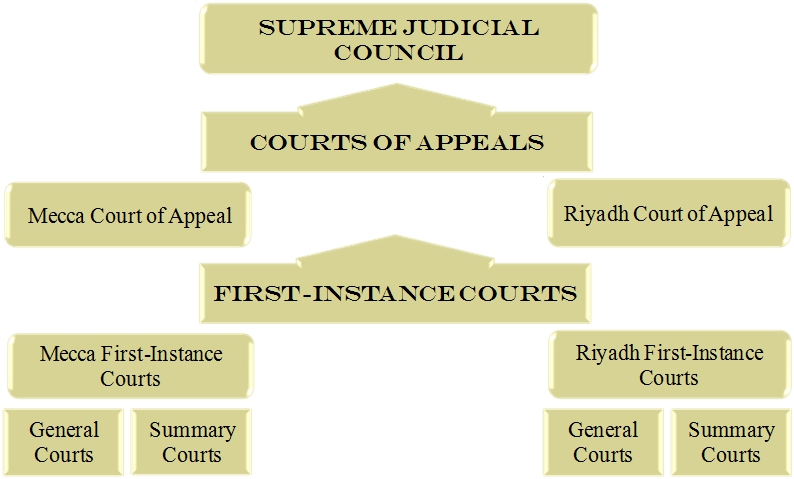
Chart 1: Simple Structure of the Current Shari’ah (Ordinary) Courts
2.3.3. The Board of Grievances
The Board of Grievances (Diwan al-Mazalem) is the administrative judiciary system of Saudi Arabia. Prior to the creation of the Board of Grievances in 1954, King Abdul-Aziz, following traditions set out by Islamic rulers, adjudicated grievances and disputes that arose before him, including those against government officials. King Abdul-Aziz made himself accessible daily to any citizen who showed up at his court with a grievance or a concern. Most effectively, he had installed next to the gate of his palace a box whose key he alone possessed. An announcement next to the box encouraged citizens to place in the box any complaints they had against an official, adding that, “[a]nyone who refrains from complaining of any injustice he suffers at the hands of an official, whether senior or low ranking, or any other, has no one to blame but himself.”[137] The declaration, however, mandated that any complaint must be reduced in writing and genuinely signed. Any false complaints would be tried and punished, while any anonymous or misnamed complaints would be ignored.[138] As the Kingdom expanded territorially, King Abdul-Aziz required all his government officials to be as committed to this concept as he was.[139]
An increasing number of disputes between government agencies and private contractors led to the creation of the Board of Grievances, which significantly resembles the Conseil d’Etat (Council of State) in France by being the Supreme Court for administrative justice.[140] It was first formed as a department of the Council of Ministers pursuant to the Council of Ministers Law.[141] However, in 1955, a Royal Decree declared the Grievances Board an independent board. The Board of Grievances had the authority to receive and investigate complaints, after which it could submit its report on the facts and circumstances surrounding each complaint followed by a submission of its recommendations to the appropriate minister in the government. Within two weeks of his receipt of the report, the minister was required to advise the Board on his position. In the event that he did not accept the Board recommendations, the Board would refer the matter to the King, who had final authority on the issue.[142] Later, the Board was assigned jurisdiction over disputes of a criminal nature such as bribery and commercial frauds, which transformed the Board function from administrative and investigative to judicial and adjudicative.[143] In 1967, the King issued a Royal Order granting the Board judicial independency from the Shari’ah Courts System. The Order declared that no lawsuit against any government agency should be heard by any Shari’ah Court prior to the obtainment of Royal consent.[144]
In 1982, a new law introduced significant changes to the nature of the Board of Grievances. The Law established an independent administrative judicial body called the Board of Grievances that stands in parallel to the Shari’ah Courts, while being directly affiliated with the King and falling outside of the Ministry of Justice.[145] The Board of Grievances is composed of a President, one or more Vice-President(s), and a number of Assistant Vice-Presidents and members specialized in the Shari’ah and the law.[146]
Although Article 1 states that the Board is an independent administrative judicial board, it has been authorized to decide cases and disputes to which the administration is not a party. It is authorized to temporarily adjudicate criminal, and commercial disputes, and to have sole authority over the enforcement of foreign judgments and foreign arbitration decisions. It covers four main categories of disputes:
- Disputes in which the government is a party;
- Disputes involving unethical business practice subject to statutory provisions;
- Disciplinary actions against civil servants; and,
- The execution of foreign judgments.
According to Article 8 of the Law of the Board of Grievance adopted in 1982, the Board adjudicates the following administrative disputes:
- Cases related to the rights provided for in the Civil Service and Pension Laws;
- Cases of objection filed by parties concerned against administrative decisions where the reason of such objection is lack of jurisdiction, a deficiency in the form, a violation or erroneous application or interpretation of laws and regulations, or abuse of authority;
- Cases of compensation filed by parties concerned against the government and independent public corporate entities resulting from their actions;
- Cases filed by parties regarding contract-related disputes where the government or an independent public corporate entity is a party;
- Disciplinary cases filed by the Bureau of Control and Investigation;
- Penal cases filed against suspects who have committed crimes of forgery as provided for by law, crimes provided for by the Law of Combating Bribery, crimes provided for by Royal Decree no. 43 dated 29/11/1377H [June 16, 1958], and crimes provided for by the Law of Handling Public Funds issued by Royal Decree No. 77 dated 23/10/1395H [Oct. 29, 1975], and penal cases filed against persons accused of committing crimes and offenses provided for by law, where an order to hear such cases has been issued by the President of the Council of Ministers to the Board;
- Requests for implementation of foreign judgments;
- Cases within the jurisdiction of the Board in accordance with special legal provisions;[147] and,
- Requests by foreign courts to carry out precautionary seizure on properties or funds inside the Kingdom.[148]
In addition, the Council of Ministers is authorized by Article 8(2) of the Board of Grievances Law, adopted in 1982, to add new jurisdiction to the Board.[149] However, the Board of Grievances may not hear requests related to sovereign actions, or objections filed by individuals against judgments or decisions issued by courts or legal panels which fall within their jurisdiction.[150]
The 1982 Board of Grievances Law offers limited guidance as to the Board’s judicial structure, hierarchy and branches. It only declares that the Board’s headquarters be in the Capital,[151] and that it, “…exercises its powers through circuits whose number, formation, subject-matter and venue are determined by decision of the President of the Board.”[152] In addition to the Board’s headquarters in Riyadh, it currently has three branches in Jeddah, Dammam, and Abha, respectively.[153] The Board’s judicial hierarchy is comprised of a number of specialized circuits that have specified jurisdiction, defined by several of the Board president’s decisions.[154] The 1982 Board of Grievances Law and the 1989 Procedural Rules before the Board of Grievances, identify three types of Board of Grievances’ circuits, organized in the following hierarchical structure:
- Board of Appeal Circuits;
- Appeal Circuits; and,
- First-Instance Circuits (see Chart 2).[155]
2.3.3.1. Board of Appeal Circuits
The Board of Appeal Circuits is the highest authority in the Board of Grievances circuits system. The Board is composed of all members of the Appeals Circuits and three members from the First-Instance Circuits who are selected by the Board’s president.[156] However, unlike the Supreme Judicial Council, wide jurisdiction over several administrative, legislative, consultative, and judicial functions, the Board of Appeal Circuits decides only on the abandonment of interpretations or principles. If the Appeal Circuit, while deciding a case, deemed it necessary to depart from an interpretation adopted by it or another Circuit or affirmed by an Appeal Circuit, the matter is referred to the President of the Board. The President passes it to the Board of Appeal Circuits. A majority, tallying at least two-thirds of the Board of Appeal Circuits’ members, is needed to adopt a new principle or precedent.[157]
2.3.3.2. Appeal Circuits
At the top of the Board circuits system there are several administrative, criminal and commercial “Scrutinizing Circuits” (hereinafter Appeal Circuits) that function as appeal courts and have final authority in grievances. Currently, there are three Appeal Circuits that were created to carry out the function of the Board of Grievances, thus functioning as administrative circuits. The jurisdiction of these circuits is defined by several decision made by the Board President.[158] Appeal Circuits are composed of three members appointed by the President of the Board, who appoints one of them as the head of the circuit. The President of the Board may form an Appeal Circuit of one member to appeal from “minor cases” specified by a regulation.[159]
The 1989 Procedural Rules before the Board of Grievances defines the judicial proceedings between the Appeal Circuits and the First-Instance Circuits. According to these procedural rules, an Appeal Circuit either reverses or affirms the judgment. In case of reversal, it may either remand the case to the issuing circuit or adjudicate it. The Appeal Circuit adjudicates the case if the case is remanded to the circuit which originally handled it and that circuit insists on its judgment, and the Appeal Circuit was not persuaded by the arguments of that circuit. If the Appeal Circuit adjudicates the case, its decision is only to be made after hearing the statements of the litigants. In this case, the judgment made by the Appeal Circuit is final.[160] Judgments affirmed by the Appealing Circuit are also final. However, in penal and disciplinary cases, final judgment is reviewed if new evidence emerges that may result in acquittal. In such circumstances, a review of the final judgment is submitted within thirty days of the Court having received knowledge of the new evidence.[161]
2.3.3.3. First-Instance Circuits
In the lower level of this hierarchy system, there are a number of First-Instance Administrative, Criminal, Disciplinary, Commercial and Subsidiary Circuits that reflect the diverse jurisdiction of the Board.[162] Due to the board’s administrative and non-administrative jurisdiction, great numbers of judicial circuits were created to undertake the board’s caseload.[163] The Board’s First-Instance Circuits are reformed regularly. Over 80 circuits have been created, one-third of which were devoted to adjudicating commercial disputes and criminal cases.[164] First-Instance Circuits are also composed of three members appointed by the President of the Board, who appoints one of them as the circuit head. The President of the Board may form the First-Instance Circuits of one member to appeal from “minor cases” specified by a regulation.[165]
An administrative case is initiated if it is filed by the plaintiff with the President of the Board of Grievances or his designee. The President then sends the case to the competent circuit of jurisdiction.[166] When a particular circuit receives an administrative case, it sets a hearing date and informs the plaintiff, the defendant, and other administrative bodies in accordance with Articles 2 & 3 of these Procedural Rules of 1989.[167] The sessions should be conducted in public unless the circuit decides to make them closed in observance of morals or for the maintenance of public order.[168] The competent circuit renders its judgment after completing the case documents and hearing the statements of both parties to the dispute, or their representatives, and confidentially deliberating in session. In circuits formed of more than one member, Judgments are rendered by majority vote.[169] The circuit’s judgment only provides a reasoned judgment. A dissenter writes his dissenting opinion in the session minutes. The minutes also include the majority response to this dissent.[170] A First-Instance Circuit judgment becomes final unless the parties decide to exercise their right to appeal the judgment within thirty days from the date of his/her receiving the judgment notice.[171]
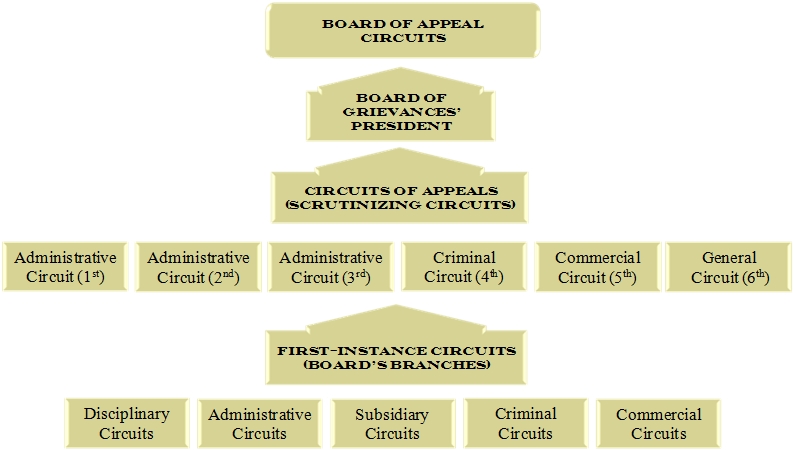
Chart 2: Simple Structure of the Current Board of Grievances
2.3.4. Administrative Committees
There are several “Administrative Committees” with judicial powers which have been periodically created since the unification of Saudi Arabia in 1932. These “Administrative Committees” have jurisdiction over civil, commercial, administrative and criminal cases and disputes arising out of the implementation of several laws and provisions. The jurisdiction of each committee is determined by the decree that created it. Examples of current Saudi administrative committees are as follows:
- The Tax Committees;[172]
- The Committees for Penalizing Traffic Violations;[173]
- The Mining Disputes Committee;[174]
- The Fraud, Cheating and Speculation Committee;[175]
- The Banking Disputes Settlement Committee;[176] and,
- The Copyright Committee.[177]
The Basic Law of Governance does not recognize these committees as part of the judicial authority. Although these committees have been established to help ease the heavy workload of cases before the Saudi Courts System, and to cope with the requirement of the social and economic development of the Kingdom, they have been subject to criticism because they introduce measures of adjudication by the “Executive Branch.”[178]
2.3.5. Judicial System Reforms
On April 2, 2005, a Royal Order was issued which approved principal amendments to the organization of the judicial system, including the establishment of specialized courts in Saudi Arabia for the first time. According to the 2005 Royal Order, specialized courts in labor, commercial, domestic, and criminal cases will have complete jurisdiction over their areas of specialization. The jurisdiction of the new specialized courts and the General Courts will be defined to avoid conflict over jurisdiction.[179] On October 1, 2007, King Abdullah bin Abdul-Aziz issued a Royal Decree approving a new body of laws regulating the judiciary and the Board of Grievances. The new laws replaced regulations in force for more than 30 years in the case of the judiciary, and about 25 years for the Board of Grievances. The Kingdom allocated a budget of seven billion riyals ($1.8 billion), “…for the King Abdullah bin Abdul-Aziz project to revamp the judicial sector, which aims at upgrading the judiciary and developing it in a comprehensive and integrated manner.”[180] These funds will be used to upgrade and build new courts while also training judges. The Saudi Judicial System will pass through a transition period lasting two to three years in which the new judicial system will be implemented.[181]
The intention of the new law is to shape the Saudi Judicial system so that it can meet a higher judicial standard set by ongoing reforms started by the passage of the Law of Criminal Procedures and Procedures before Shari’ah Courts Law in 2001 to 2002. The new law came as a response to the social and economic needs of Saudi society. It represents a major step toward meeting the requirements of a modern and thriving economy, while also improving the business environment. The new law affirms the Saudi justice system’s independence and impartiality; it will also ensure the highest possible fair trial standards.
2.3.5.1. The New Role of the Supreme Judicial Council
Under the new Judiciary Law of 2007, the Supreme Judiciary Council will no longer serve as the Kingdom’s highest court. However, it will continue to oversee administrative aspects of the judiciary. The Supreme Judicial Council will be composed of a president and ten members: the Chief of the High Court, four full-time members of the rank of Chief of the Appellate Court appointed by the King, the Deputy Minister of Justice, the Chief of the Bureau of Investigation and Prosecution, and three members who will possess the qualifications required by the Appellate Judge, appointed by the King. All Supreme Judicial Council members will serve for a period of four years, which will be renewable for other periods.[182]
Under the new law, the Supreme Judicial Council performs several administrative roles. In its administrative capacity, the Council, as stated in Article 6 of the new law, will have a supervisory role over Shari’ah Courts and Judges in accordance with the Law of the Judiciary, adopted in 2007. The Council will primarily supervise the courts, administering the employment-related affairs of all members of the judiciary within those limits laid down by the law. Such affairs include promotions, transfers, assignments, secondments, and training. The Council will also monitor the proper discharge of their duties in accordance with established rules and procedures, to ensure the independence of judges. The Council will have the authority to:
- Issue regulations on matters related to judges duties, subject to the King’s approval;
- Issue judicial inspection regulations; establish, merge, or abolish courts;
- Specify the areas of their jurisdiction, and the formation of their circuits;
- Name the Appellate Courts’ chiefs and their deputies, and First-Degree Courts chiefs and their deputies;
- Issue rules governing the functions and powers of the Courts’ chiefs and their deputies;
- Issue rules governing the method of selecting judges;
- Regulate assistant judges’ duties;
- Set counterpart judicial work required to fill judicial levels; and
- Propose what it deems necessary and relevant to its competency.
At the end of each year, the Council will prepare a comprehensive report containing all achievements, constraints and proposals, which will then be submitted to the King.[183] In addition, the Supreme Judicial Council will have a Jurisdictional Conflict Committee that has jurisdiction to solve jurisdictional conflicts and conflicts arising out of two final judgments entered by the Judiciary Courts and the Board of Grievances Courts.[184] Meetings of the Council’s Permanent Panel are governed according to regulations that administer attendance and voting.[185] Moreover, the Council will encompass several committees, including a Judicial Disciplinary Committee[186] and a Department for Judicial Inspection.[187]
2.3.5.2. The New Courts System
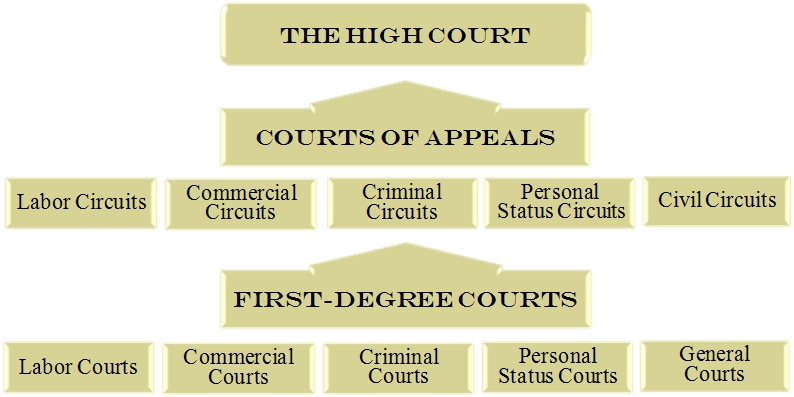
The new Law of the Judiciary organizes the Courts System in the following hierarchical structure in descending order:
- High Court;
- Courts of Appeals; and,
- First-Degree Courts, which are composed of:
- General Courts;
- Criminal Courts;
- Personal Status Courts;
- Commercial Courts; and,
- Labor Court (see Chart 3).[188]
2.3.5.2.1. High Court
The High Court will assume the previous Supreme Judicial Council’s main function as the highest authority in the judicial system. The High Court will be seated in Riyadh and will be composed of a president—who possesses the qualifications required of the Chief Appellate Judge and will be appointed by a Royal Order, along with a sufficient number of judges holding the rank of Chief of the Appellate Court— appointed by a Royal Order on the recommendation of the Supreme Judiciary Council.[189] The High Court will exercise its jurisdictions through specialized circuits (as needed), which will be comprised of three-judge panels—except for the Criminal Circuit, which will review judgments involving certain major punishments, such as the death sentence. These will be composed of a five-judge panel.[190] Chief Judges of the High Court Circuits will be appointed by decisions of the Supreme Judicial Council on the recommendation of the Chief of the High Court.[191]
The High Court will perform several legislative, consultative, and judicial roles. In addition to the function set forth by the Law of Procedure, before Shari’ah Courts and the Law of Criminal Procedure, the Court will supervise the implementation of Islamic law (Shari’ah) and regulations enacted by the King which are consistent with the issues that fall within the general jurisdiction of the judiciary. The High Court will review rulings issued or upheld by the Courts of Appeals, including those which relate to cases punishable by death, and other certain major crimes.[192] In addition, the High Court will review judgments and decisions issued or supported by the Courts of Appeals on matters not previously mentioned. These include questions of law or questions of procedure—not questions of fact—if the objection to judgments are based on:
- A violation of the of Islamic Shari’ah provisions and regulations issued by the King that does not contradict with Shari’ah rules;
- Entry of judgment from a Court not properly constituted as provided for by the Law of the Judiciary and other regulations;
- Entry of judgment from an incompetent Court or Circuit Court; and
- Fault in the framing of an incident, or impropriety in its description of said case.[193]
The High Court will have a General Council presided over by the Chief of the High Court.[194] The General Council will play a very crucial role in establishing general principles and precedents that have to be followed by lower courts, and considering other issues set forth by the Law of the Judiciary or other laws. Decisions of the General Council will be rendered by a vote of the majority of members in attendance. In the event of a tie, the Chief Judge will cast the deciding vote. All decisions adopted by the High Court’s General Council will be final.[195] Lastly, if one of the High Court Circuits, while reviewing a case, deems it necessary to depart from an interpretation adopted by either that same Circuit Court or by a different Circuit of the same Court in previous judgments, the case will be referred to the Chief of the High Court, who will refer it to the High Court General Council for a decision.[196]
2.3.5.2.2. Courts of Appeals
The new reforms announced by King Abdullah are aimed at introducing safeguards—such as Courts of Appeal—which can overturn decisions by lower courts. The new law will establish one or more Courts of Appeals in each of the Kingdom’s provinces. Each court will function through specialized circuits comprised of three three-judge panels, except for the Criminal Circuit, which reviews judgments involving certain major crimes, including those which bear the death sentence. It will be composed of five judge panels.[197] Courts of Appeals will consist of the following circuits: Labor Circuits, Commercial Circuits, Criminal Circuits, Personal Status Circuits, and Civil Circuits.[198] It will also be possible to establish specialized Appeals Circuits in the counties of each province where a Court of Appeals is established.[199] Each circuit will be composed of a president appointed by the Chief of the Appellate Court and judges holding the rank of Appellate Judge. The Courts of Appeals will hear appealable decisions from lower courts. They will render their judgment after hearing the litigants’ arguments in accordance with the Law of Procedure before Shari’ah Courts and the Law of Criminal Procedure.[200]
2.3.5.2.3. First-Degree Courts
The First-Degree Courts will be established in the Kingdom’s provinces, counties and districts in accordance to the needs of the system.[201] First-Degree Courts will consist of General Courts, Criminal Courts, Commercial Courts, Labor Courts, and Personal Status Courts. General Courts will be established in provinces and will consist of specialized circuits including Implementation and Approval Circuits and Traffic Cases Circuits. General Courts will be composed of one or three-judge panels as specified by the Supreme Judicial Council.[202] The Criminal Court will consist of the following specialized circuits: Qisas (Retaliatory Punishment) Cases Circuits, Hudud Cases Circuits (Prescribed Punishment), Ta’zir (Discretionary Punishment) Cases Circuits, and Juvenile Cases Circuits. The Criminal Court will be composed of a three-judge panel. Other cases (offences) specified by the Supreme Judicial Council will be heard by one judge. It is worth noting that all existing Summary Courts will be transmitted to Criminal Courts.[203]
Other Personal Status, Commercial, and Labor Courts will consist of specialized circuits as needed, and will be composed of one or more judges as specified by the Supreme Judicial Council.[204] It is worth mentioning that Commercial and Labor Courts will oversee disputes that had previously been handled by “special committees” at the Ministry of Commerce and Industry, and the Ministry of Labor. These committees were previously criticized because their decisions were not always enforceable, and they were challenged in the courts.[205] There were also questions regarding the impartiality and independence of these committees. Existing Commercial Circuits of the Board of Grievances First-Instance Circuits and Appeal Circuits will be transferred (with all their judges, cases, etc.) to the new judicial system’s First-Degree Commercial Courts and Appellate Courts.[206]
In addition, disputes related to divorce and other family and personal matters would be settled by their own courts. The two existing Courts of Guarantee and Marriages located in Riyadh and Makkah will be transformed into Personal Status Courts.[207] General Courts in counties and districts will consist of one or more specialized circuits, according to the needs of the system, and will be composed of one or more judges as specified by the Supreme Judicial Council. Specialized Criminal, Personal Status, Commercial, and Labor Circuits may be established in General Courts in Counties and Districts where no Specialized Court has been established.[208] Moreover, where necessary, the Supreme Judicial Council may assign one or more circuits to hear pilgrims’ cases.[209]
Specialized circuits in Counties and Districts General Courts will have the same jurisdiction as the specialized courts and will be composed of one or more judges.[210] In addition, the Supreme Judicial Council will specify the jurisdiction of the General Courts, which are comprised of one judge.[211] However, in general and without prejudice to the Law of the Board of Grievances, courts will have jurisdiction to render decisions with respect to all disputes and crimes in accordance with the rules for the jurisdiction of courts as set forth in the Law of Procedure before Shari’ah Courts and Law of Criminal Procedure.[212] Finally, the new judicial system will assume jurisdiction over most of the civil, commercial and criminal disputes previously decided by Administrative Committees. A committee from the Bureau of Expert in the Council of Ministers will convene, within a year of the Law of the Judiciary’s effective date, to review all laws and regulations affected by such transition and suggest their amendments accordingly.[213] The newly established Supreme Judicial Council will be required to study the condition of the Administrative Committees exempted from this transition (the Banking Disputes Settlement Committee, Financial Market, and Customs Committees) and will submit its finding within a year to complete the regulatory procedures.[214] In cases other than those requiring a visit to the site of a dispute, courts may not hold their hearings in places other than their respective seats. However, by a decision of the Supreme Judicial Council, courts may, when necessary, hold their hearings elsewhere—even if the new location falls outside of their areas of jurisdiction.[215]
Chart 3: Simple Structure of the New Courts System
2.3.6. Board of Grievances Reforms
King Abdullah’s Royal Decree also approved an overhaul of Saudi Arabia’s Board of Grievances. The pyramidal structure of the new Board Administrative Courts stands parallel to the structure of the Judicial Courts. The new law affirms that the Board of Grievances—which will be based in the city of Riyadh—is an independent administrative judicial commission responsible directly to the King.[216]
The Board of Grievances will consist of a President of the rank of minister, at least one Vice-President, a number of Assistant Vice-Presidents, and several judges.[217] Vice Presidents will be appointed by Royal Order from among those who possess the qualifications required to become a Chief of the Appellate Court.[218]
Alongside the Supreme Judicial Council, the new Board of Grievances Law establishes an Administrative Judicial Council composed of the President of the Board, the Chief of the High Administrative Court, the senior Vice President of the Board, and four judges of the rank of Chief of the Appellate Court, all appointed by Royal Orders.[219] The Council will perform several administrative tasks similar to those of the Supreme Judicial Council.[220] The Administrative Judicial Council will meet every two months; its meetings will be valid if attended by at least five of the members, and decisions of the Council will be made by majority vote.[221] Finally, the Administrative Judicial Council will encompass several committees, including the Jurisdictional Conflict Committee,[222] the Judicial Disciplinary Committee, and the Department for Judicial Inspection.[223]
The Board of Grievances Law organizes the Board according to the following hierarchical structure:
- High Administrative Court;
- Administrative Courts of Appeals; and,
- Administrative Courts (see Chart 4).[224]
2.3.6.1. High Administrative Court
The new law also establishes a Higher Administrative Court, which will be comprised of a President holding the rank of minister—appointed by Royal Order, and a sufficient number of judges bearing the rank of Chief of the Appellate Court—appointed by Royal Order on the recommendation of the Administrative Judicial Council.[225] The High Court will exercise its jurisdictions through specialized circuits (as needed), which will be composed of three-judge panels.[226] The Higher Administrative Court will have a General Council, which will be presided over by the Chief of the High Administrative Court and the membership of all of its judges. Its meetings will be valid if attended by at least two thirds of its members. The Council’s decisions will be issued by majority vote.[227] If, while reviewing a complaint, one of the High Administrative Court Circuits deems it necessary to depart from an interpretation adopted by either the same or a different circuit of the same court, the case will be referred to the Chief of the High Administrative Court, who will refer it to the High Administrative Court General Council for a decision.[228]
The Board of Grievances High Administrative Court will have jurisdiction to review rulings issued or upheld by the Administrative Courts of Appeals if the objection to the judgment is based on:
- A violation of the Islamic Shari’ah provisions or regulations which do not contradict Shari’ah rules, as well as faults in its implementation or interpretation—including violations of judicial principles established by the High Administrative Court;
- Entry of judgment from an incompetent court;
- Entry of judgment from a court not properly constituted as provided by the Board of Grievances Law;
- Fault in framing the incident or impropriety in its description;
- Entry of a judgment contrary to another previous decision issued between the parties to the proceedings; or,
- Jurisdictional conflict among the board’s courts.[229]
2.3.6.2. Administrative Courts of Appeals
The new law establishes at least one Administrative Court of Appeals. Each court will function through Specialized Circuits composed of three-judge panels. The Administrative Courts of Appeals will hear appealable decisions from the lower Administrative Courts. They will render their judgment after hearing the litigants’ arguments in accordance with the Law of Procedure before Shari’ah Courts and the Law of Criminal Procedure.[230]
2.3.6.3. Administrative Courts
The new law establishes one or more Administrative Courts. Each court will function through specialized circuits such as Administrative Circuits, Employment, and Disciplinary Circuits, and Subsidiary Circuits, and will be composed of either a one or a three-judge panel.[231] The Administrative Courts will have jurisdiction to decide the following:
- Cases related to the rights provided for in the Civil and Military Service and Pension Laws for government employees and hired hands, and independent public entities and their heirs and claimants;
- Cases of objection filed by parties concerned by administrative decisions, where the reason for such an objection is lack of jurisdiction, a deficiency in form, a violation or erroneous application or interpretation of laws and regulations, or abuse of authority. The rejection or refusal of an administrative authority to take a decision that it should have taken pursuant to laws and regulations is an administrative decision;
- Cases of compensation filed by parties concerned against the government and independent public corporate entities resulting from their actions;
- Cases filed by parties regarding contract-related disputes where the government or an independent public corporate entity is a party;
- Disciplinary cases filed by the Bureau of Control and Investigation;
- Other Administrative Disputes; and,
- Requests for implementation of foreign judgments.[232]
Thus, it is clear that the Board of Grievances will continue to handle administrative disputes involving government departments.[233] It is important to note that the previous Law of Board of Grievances, adopted in 1982, empowered the Board to hear and punish offences involving bribery, forgery, exploitation of official influence or abuse of authority in criminal prosecution proceedings, or violations of human rights. However, the new law relinquished to the new Judicial Court System the jurisdiction over criminal offenses that had been granted by the Law of 1982. In addition, the Board of Grievances may not hear requests related to sovereign actions, objections filed by individuals against judgments, decisions issued by courts or legal panels which fall within their jurisdiction, or any decision issued by the Supreme Judicial Council or the Administrative Judicial Council.[234]
Moreover, it is noteworthy that all the existing Criminal Circuits of the Board of Grievances’ First-Instance Circuits and Appeal Circuits will be transferred to the new judicial system’s First-Degree Criminal Courts and Appellate Courts.[235] Finally, the Board of Grievances will have jurisdiction over most of the Administrative Committees’ administrative disputes. A committee from the Bureau of Experts in the Council of Ministers will be convened, within a year of the Law of the Judiciary becoming effective, to review all laws and regulations affected by the transition and to suggest amendments.[236]
Chart 4: Simple Structure of the New Board of Grievances
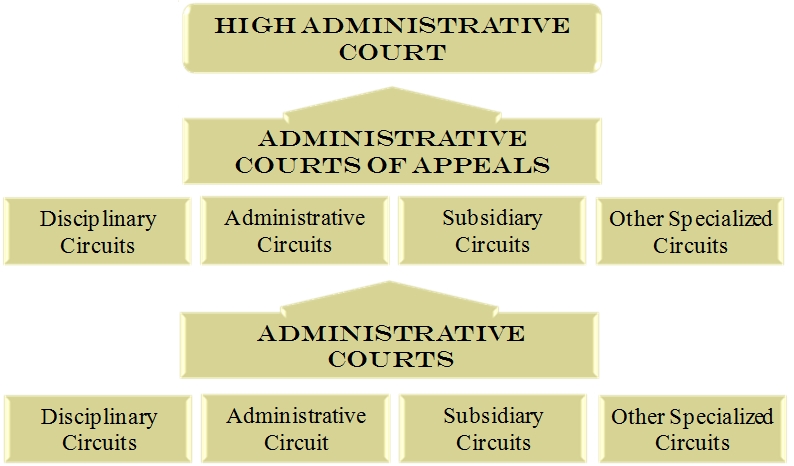
2.3.7. Judges’ Qualifications, Job Performance, and Training
As Islamic Shari’ah is the main authority for Saudi Courts, a judge is required to have a higher standard of education, knowledge, and understanding of socio-cultural issues, and must be equipped with the tools of ijtihad, as well as specific professional skills that will lead to reasonable, just, and impartial judgments. The Law of the Judiciary requires each judicial candidate to hold a degree from one of the Shari’ah colleges in the Kingdom of Saudi Arabia. According to Saudi “ulama”, education in Saudi universities has the purpose of producing “ulama” capable of relative degrees of “ijtihad”.[237] A candidate may hold an equivalent certificate, although he is required to pass a special examination prepared by the Supreme Judicial Council.[238] To enable judges to attain the highest levels of education, the Kingdom has established a Judicial Academy and an Institute of Public Administration to train judges, enhance their expertise, develop their skills, and provide them with the information that they need to work effectively. In addition, to cope with the transition from the current to the new judiciary system, the new Law of the Judiciary requires all Criminal, Labor and Commercial Courts judges—and all Criminal, Labor and Commercial Courts of Appeal Circuits judges in all Provinces, Counties and Districts of the Kingdoms—to undergo at least two months of training in the Commercial, Labor and Criminal Procedure laws and other relevant regulations.[239]
In general, there are different requirements and qualifications that a person must possess in order to be a member of the Judiciary. To be appointed as a judge, a candidate must:
- Be a Saudi national;
- Be of good character and conduct;
- Be qualified to hold the position of judge in accordance with the Shari’ah’s provisions;
- Fulfill certain educational requirements;
- Be at least forty years old if he is to be appointed as an appellate judge, or be at least twenty-two years old if he is to be appointed to any other rank; and,
- Not have been sentenced for a crime affecting his religion or honor or dismissed from a public office as a disciplinary action, unless he has been rehabilitated.[240]
Assistant judges are initially appointed on probation for a period of two years,[241] and newly appointed judges are assigned to serve with court judges on probation for at least one year in order to become familiar with the court’s procedures.[242] During the period of probation, newly appointed assistant judges benefit from the experience of senior judges and work on simple cases and settlements. Their work is always reviewed by higher-ranking judges, and their judgments are reviewed or approved to ensure that they conform to the rules and procedures of the courts before they are handed down.[243] In addition, during the period of probation, an assistant judge may be dismissed for lack of competence by a decision of the Supreme Judicial Council.[244] Other newly appointed judges may be dismissed during their period of probation for lack of competence by Royal Order on the recommendation of the Supreme Judicial Council.[245]
A judge who begins his career at the bottom of the judicial hierarchy will usually be required to satisfy additional requirements in order to be promoted to a higher tier of the judiciary. These requirements include:
- A graduate degree from the High Judiciary Institute or one of the Shari’ah colleges in the Kingdom;
- A diploma in System Studies from the Institute of Public Administration in the Kingdom;
- Experience teaching Islamic law (fiqh) or Islamic jurisprudence (Usul al-Fiqh) in one of the Shari’ah colleges; or,
- Experience fulfilling comparable judicial duties for a defined period of time.[246]
These and other requirements are strongly enforced to ensure the presence of qualified judges in each tier of the judiciary. The new ranks of the judiciary are organized according to the following hierarchical structure:
- Chairman of the High Court;
- Chief of Appellate Court;
- Appellate Judge;
- Chief of Court (A);
- Chief of Court (B);
- Deputy Chief of Court (A);
- Deputy Chief of Court (B);
- Judge (A);
- Judge (B);
- Judge (C); and,
- Assistant Judge.
The new ranking system of members of the judiciary placed the position of Chairman of the High Court at the top of the judicial ranking hierarchy, replacing the Chairman of the Supreme Judicial Council (see Chart 5).[247] These ranks are filled in accordance with the provisions of the new Law of the Judiciary.[248]
Chart 5: The New Ranks of the Judiciary in the Saudi Arabian Judicial System
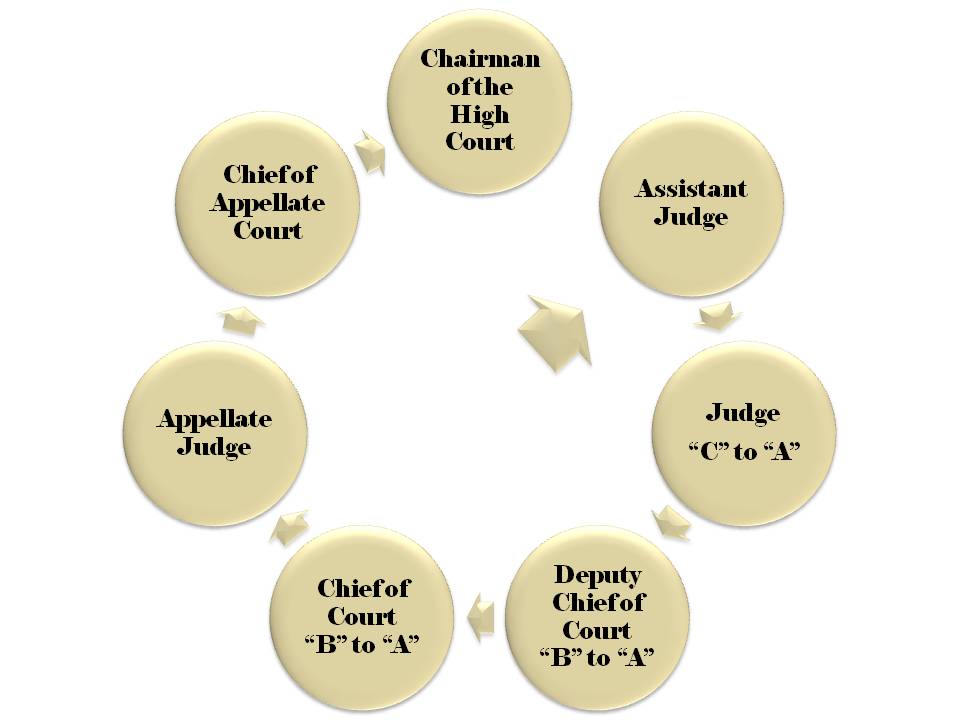
In general, Royal Orders based on decisions of the Supreme Judicial Council affect the appointment and promotion of judges. The Supreme Council’s decision must state the statutory conditions that have been fulfilled in each case. In the case of promotion, the Council usually follows the order of absolute seniority (in the service). Where two or more judges have served for equal periods of time, the selected candidate is given priority based on his proficiency reports. Where the proficiency reports are equal or there are no proficiency reports to examine, priority is based on age and seniority.[249]
Similarly, occupation of any of the ranks of the Board of Grievances requires the qualifications specified for each rank in the Law of the Judiciary, with slight modification.[250] The current ranks in the Board of Grievances are organized according to the following hierarchical structure:
- Assistant Head of the rank of Chief of Appellate Court;
- Assistant Head of the rank of Appellate Judge;
- Counselor (A) of the rank of Chief of Court (A);
- Counselor (B) of the rank of Chief of Court (B);
- Counselor (C) of the rank of Deputy Chief of Court (A);
- Counselor (D) of the rank of Deputy Chief of Court (B);
- Assistant Counselor (A) of the rank of Judge (A);
- Assistant Counselor (B) of the rank of Judge (B);
- Assistant Counselor (C) of the rank of Judge (C); and,
- Trainee of the rank of Assistant Judge (see Chart 6).[251]
Appointments and promotions of Board members are carried out in accordance with procedures defined in the judicial cadre.[252] The current Board has, “[a]n Administrative Affairs Committee,” composed of the President of the Board or his deputies and six members selected by the President from counselors whose ranks are not lower than (B).[253] The Committee has powers similar to those of the current Supreme Judicial Council with regard to Board members.[254] The Committee’s decisions are issued by a majority vote of its members.[255]
Chart 6: The Current Ranks of the Members of the Saudi Arabian Board of Grievances
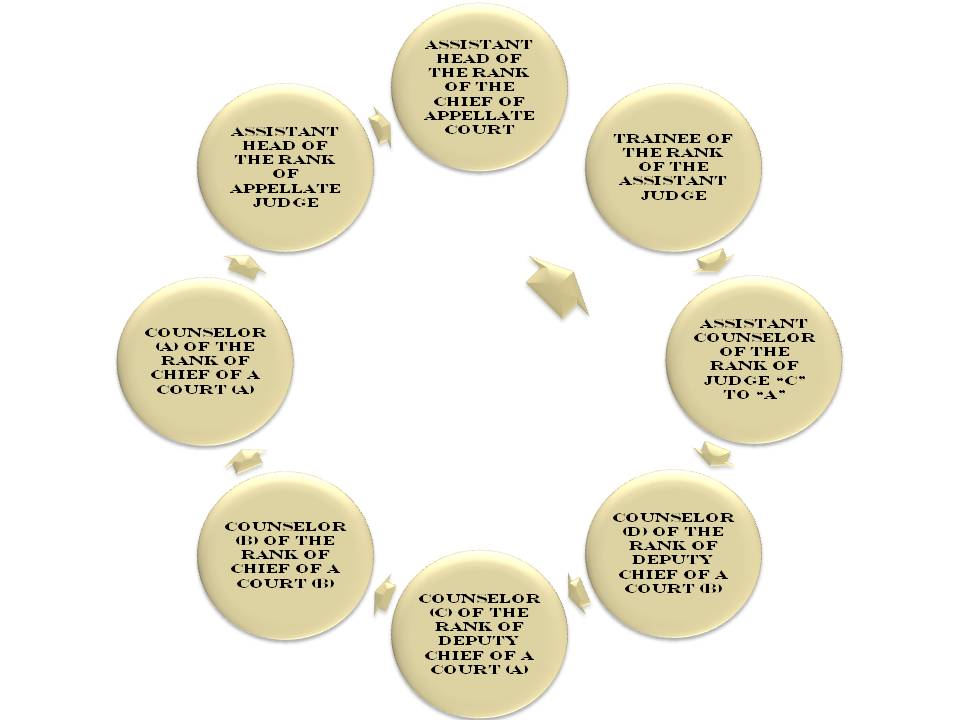
Ranks in the new Board of Grievances are similar to the judiciary ranks. These ranks are filled in accordance with the provisions of the new Board of Grievances Law.[256] The new ranking system addressing members of the Board places the position of Chairman of the High Administrative Court at the top of the Board of Grievances’ hierarchy—similar to the chairman of the High Court position established by the new Law of the Judiciary (see Chart 5). The new Board of Grievances Law establishes an Administrative Judicial Council. The Council will perform several administrative roles similar to those of the new Supreme Judicial Council.[257]
Moreover, the 1982 Law of the Judiciary formed a Department for Judicial Inspection at the Ministry of Justice. It consists of a president and a sufficient number of members selected from among the Judges of the Appellate Court or the General Courts by decision of the Supreme Judicial Council for one year—a term which is renewable for other periods. Under the new Law of the Judiciary, the Supreme Judicial Council will encompass the Judicial Disciplinary Committee,[258] which will inspect the work of judges of Appellate and First-Degree Courts for the purpose of collecting information about their level of efficiency and their ability to perform the duties of their offices. All inspections are made by members with ranks higher than those of the judges whose work is being inspected.[259] Inspection of the members of the judiciary is made at least once and not more than twice a year.[260] Evaluation of the proficiency of a judge is based on the following ratings:
- Competent;
- Above average;
- Average; and
- Below average.[261]
If a judge receives a below average rating in three consecutive proficiency reports, he is placed on retirement by a Royal Order on the basis of a decision by the Supreme Judicial Council.[262] Judges are allowed to contest the findings of these reports through defined mechanisms and regulations.[263] No member of the judiciary may be promoted unless his work has been subjected to inspection at least twice while he was in the rank from which he is to be promoted, and unless the last two reports preceding the promotion rated his proficiency as (at least) average.[264] The current Board of Grievances has a Supervisory Committee, which assumes a supervisory role over the Board’s members. The committee has provisions similar to those of the Judicial Inspection Department.[265] The Administrative Judicial Council of the new Board of Grievances Law will encompass a Department for Judicial Inspection.[266]
Moreover, to provide judges with the most up-to-date working knowledge and to avoid any discrepancy in their judgments, the current and the new Law of the Judiciary establish a research department under the Ministry of Justice composed of a number of specialized members (who hold at least a Bachelors degree) to abstract, classify, and index the principles established by the Higher Courts, prepare selected collections of judgments, general rules and precedents for publication, execute research projects, and answer enquiries of judges.[267] The Implementation Mechanism of the Judiciary Law of 2007 also establishes a Research and Study Department in the High Court; the Department is composed of researchers who prepare studies requested by the High Court specialized Circuits.[268] The new Law of the Board of Grievances establishes similar departments, which are comprised of a chairman, several judges, professionals and researchers. These departments provide opinions, prepare research projects, classify the Board judgments, general rules and precedents, and prepare them for publication.[269] The Implementation Mechanism of the Law of the Board of Grievances also establishes a Research and Study Department in the High Administrative Court comprised of researchers whose role is to prepare studies requested by the High Administrative Court’s specialized circuits.[270]
In sum, the application of Islamic law in the Saudi Arabian Shari’ah Courts requires justices with specialized qualifications in complex jurisprudence. A judge’s knowledge, qualifications, experience gained while in office, and successful completion of inspection all confer respect onto the judicial office and provide confidence in judicial rulings.
2.3.8. Judicial Independence
The Kingdom realized that an independent judiciary is a cornerstone of the protection of rights and freedoms. Such protection cannot be accomplished without providing a fair trial under an independent and impartial Court System. The independence of the judiciary is enshrined in Article 46 of the Basic Law of Governance, which states that, “[t]he judiciary shall be an independent authority and, in their administration of justice, judges shall be subject to no authority other than that of the Islamic Shari’ah.”[271] The same principle is embodied in many provisions of the Law of the Judiciary, which provide several safeguards. For example, Article 1 of the Law of the Judiciary explains that, “[j]udges are independent and, in the administration of justice, they shall be subject to no authority other than the provisions of Shari’ah and laws in force.”[272] The same Article provides that, “[n]o one may interfere with the Judiciary.”[273] Article 5 of the Ordinance concerning the Prosecution of Ministers prohibits any interference with Courts affairs, and makes personal interference with the affairs of the judiciary a crime punishable by imprisonment for a term ranging from three to five years.[274]
Moreover, the Law of the Board of Grievances recognizes the Board as an independent administrative judiciary,[275] and the Board and its judges enjoy the same safeguards as provided in the Law of the Judiciary.[276] Furthermore, one of the important characteristics of judicial independence is the protection of judges from removal from office or transfer. Such protection is guaranteed by the Law of the Judiciary to protect judges from any act that might compromise their independence. Article 2 states that, “[j]udges are not subject to removal from office except in the cases set forth herein.”[277] Article 3 stipulates that, “judges may be transferred to other positions only with their consent or by reason of promotion” in accordance with the provisions of the law.[278] The Law of the Judiciary further asserts that judges are not subject to removal from office (save in cases specified by the law, such as retirement).[279]
The accountability of judges is ensured by special procedures which provide the safeguards needed to ensure the protection and independence of judges. Article 4 of the Law of the Judiciary stipulates that, “[a] judge may not be sued except in accordance with the conditions and rules pertaining to the disciplining of judges.”[280] Section 5 of the Law of the Judiciary is devoted to disciplinary sanctions against judges.[281] To ensure that the executive authority will not interfere with the judicial system, the Law of the Judiciary stipulates that the Supreme Judicial Council is the only authority empowered to discipline a judge.[282] The current Board of Grievances has a Disciplinary Committee which deals with the members of the Board’s misconduct.[283] The Administrative Judicial Council of the new Board of Grievances Law will encompass a Department for Judicial Inspection.[284]
It is important to note that the new Law of the Judiciary clearly acknowledges the doctrine of separation of powers. The new law stressed the authority of judges in making decisions independent of outside influence, especially the influence of the “Executive Branch.” The most prominent feature of the new law is its practical application of the judicial independence principle, as evidenced by the limiting of the Ministry of Justice’s administrative control over the judiciary. Under the new law, the right to supervise all courts and judges was transferred from the Minister of Justice to the Supreme Judicial Council.[285] The Supreme Judicial Council makes all decisions regarding judges’ promotion, transfer, assignment, replacement, and training, and monitors the proper discharge of their duties and other issues that were subject to the supervision of the Ministry of Justice.[286]
In addition, under the previous law, the Minister of Justice once enjoyed an approval authority over the decisions of the courts’ high councils, such as the Courts of Appeals General Council.[287] However, the new Law of the Judiciary removed the Minister of Justice from the decision-making process of similar bodies such as the High Court General Council which, according to the new law, renders its decisions by majority vote. All of its decisions will be final without any interference from any member of the Executive Branch.[288] Moreover, the new law removed a provision from the Law of the Judiciary of 1975 that gave the Minister of Justice the authority to select a person to fill an absent member’s seat at a Supreme Judicial Council meeting.[289]
Furthermore, the Supreme Judicial Council is now the sole authority in determining the composition of the First-Degree Courts and designating their seats and jurisdictions,[290] which were previously effected by decisions made by the Minister of Justice on the recommendation of the Supreme Judicial Council.[291] The Council also became the sole authority in naming the Appellate Courts’ Chiefs and their Deputies, and First-Degree Courts’ Chiefs and their Deputies.[292] The Council also became the sole authority in deciding when the First-Degree Courts could hold their hearings outside of their areas of jurisdiction.[293] Special examinations for candidate judges who hold “Shari’ah Degrees” from one of Saudi Arabia’s Shari’ah Colleges will now be prepared by the Supreme Judicial Council instead of the Ministry of Justice.[294] The Supreme Judicial Council now has the authority to specify what is meant by judicial duties which are mentioned as a requirement in the appointment and promotion process for judges. Such determinations had been made by the Council of Ministers on the recommendation of the Minister of Justice.[295]
The principles of judicial independence from the Executive Branch were further preserved when the new law transferred the Department for Judicial Inspection from a committee under the Ministry of Justice authority to the Supreme Judicial Council authority.[296] The new law also moved the authority to issue regulations and procedures of judicial inspection, the authority to institute a disciplinary action, and the authority to implement judges’ reprimands from the authority of the Minister of Justice to the Supreme Judicial Council authority.[297] Finally, it should be noted that under the new law, the interaction between the Ministry and the Courts is limited to matters of:
- Administrating and financially supervising the courts and other judicial panels;
- Assuaging the effective functioning of the judiciary;
- Modernizing the judiciary; and,
- Improving its efficiency.[298]
However, it has been argued that the decisions pertaining to the appointment of judges are made, to a great extent, by administrative authorities. For instance, the Supreme Judicial Council members, and the Chief of the High Court, are appointed by the King.[299] To understand why higher-ranking Judges are appointed by the King, it is important to realize that under Islamic Shari’ah, a Muslim ruler is mainly responsible for the administration of justice and the maintenance of the independence and dignity of the judiciary. It is his duty to look for those who are highly qualified and well-versed in Islamic law and to nominate them to the Highest Courts and Councils in the Kingdom.[300] This process is part of the King’s constitutional role—asserted in Article 55 of the Basic Law of Governance—in carrying out, “…the policy of the nation, a legitimate policy in accordance with the provisions of Islam; the King oversees the implementation of the Islamic Shari’ah, the system of government, the state’s general policies; and the protection and defense of the country.”[301]
Thus, it is the type of responsibilities and authorities that the ruler enjoys as prescribed by Islamic Jurists for the Head of the Islamic State, which has been exercised by Muslim rulers throughout the history of Islamic States.[302] It is also worth mentioning that although the King appoints judges so that they may put Islamic Shari’ah into effect, the applied law (Islamic Shari’ah) remained independent from the King and outside the state’s domain. In other words, while a Muslim ruler appoints judges, a ruler may not interfere in the judicial process by altering decisions or redirecting cases. Thus the principle of separation of powers exists between the King and the Judiciary.[303]
In addition, it is true that the right to an independent and impartial court is a basic and absolute right, “…that may suffer no exception.”[304] Due to the fundamental nature of the right to a fair trial, it, “…requires compliance in appearance as well as fact.”[305] The requirement of independence has been interpreted to mean that the, “…courts must be independent of both the executive and the parties.”[306] This independence must be institutional and functional. For instance, the European Court on Human Rights clarified that for impartiality to exist, two conditions must be satisfied, “(i) the tribunal must be subjectively free of personal prejudice or bias; and (ii) the tribunal must be impartial from an objective point of view” (that is, it must offer sufficient guarantees to exclude any legitimate doubt of partiality).[307]
The overall effect of the administrative power should be weighed against other aspects of judicial statues that provide guarantees of independence and impartiality. “The international instruments and guidelines require that the courts operate in a manner strictly consistent with fair trial requirements.”[308] The limited administrative involvement in the judiciary could be tolerated only as long as sufficient safeguards are in place to guarantee the court and judges’ independence and impartiality. The law in Saudi Arabia recognizes the principle of the independence of the judiciary and judges. The administrative involvement in the judicial nomination process is restricted and based on other administratively stipulated standards, such as seniority among judges of advanced seniority in the judicial corps.
The new Judicial System clearly asserted the independence of judges and their adherence to Islamic rules while providing them with adequate safeguards to protect them from arbitrary transfer, dismissal, or legal action. Therefore, there is no legitimate reason to fear that a particular judge lacks independence or impartiality due to the limited level of administrative involvement in the Saudi judicial system.
2.3.9 Sources of Law
All official legal materials in Saudi Arabia are written in Arabic, the official language of Saudi Arabia. Legal materials take many forms but can be classified under three main sources: Islamic Law, Statutory Law, and Royal Orders.
The legal system in Saudi Arabia relies on the two main sources of Islamic Shari’ah: Qur’an and Sunnah. The first source is: the Islamic law which is availed from the Holy Book of Islam, “the Qur’an”, and the second is the teachings and precedents of the Prophet Muhammad, which is called “the Sunnah”. In addition, there is a consensus of opinion and Islamic rulings regarding the medieval Islamic institutions of learning that specialize in interpreting the divine law (fiqh). These rulings, based on the interpretation of the Qur’an and Sunnah, are considered to be one of the sources of Islamic law which take on different forms known as ‘the striving of a legitimate scholar to reach a religious verdict’ (ijtihad), Islamic rulings dealing with issues not present at the time of the Prophet (fatwa), consensus of the earliest generations of Muslims (ijma), rulings based on analogy (qiyas), other sources of fiqh such as unrestricted public interest (al-Maslahah al-Mursalah), and custom (urf), which are called Usul al-Fiqh rules.[309] Broadly speaking, the body of Islamic Law is divided into three main categories:
- Worship and rituals matters (ibadat);
- Civil and other legal obligations which cover, in a contemporary sense, commercial, constitutional, administrative, labor, employment, family, and civil laws (mua’malat); and,
- Punishments (uqubat).[310]
To learn the law of Saudi Arabia, one turns first to the “fiqh”, or Islamic Law. In other words, one turns not to state legislation or court precedents but to the opinions, the “ijtihad,” of religious-legal scholars from both the past and the present who, by their piety and learning, have become qualified to interpret the scriptural sources and to derive laws. Most of the Islamic Law applied today, according to the recognized Islamic schools of law, can be found in books of “fiqh” that were written by Muslim Scholars (ulama) over a period of nearly fourteen centuries.[311] Judges in Saudi Arabia consult these books (especially those books considered the primary sources in each Islamic school of thought) to make their rulings.[312] Professor Frank Vogel, who studied the Saudi Legal System, states:
Except for the Qur’an, all the … sources of Saudi law, even the collection of the Prophet conducts, were compiled or written by scholars, the ‘ulama.’ The authority of ‘ulama’ to produce these texts rests on their status as scholars, and not on any official or formal positions they may hold such as judge or instructor in a scholarly institution…From these sources, then, other ‘ulama’, such as the Mufti and judges of Saudi Arabia, produce fiqh to guide others or to decide disputes. Ordinarily, it does take a scholar to evaluate these sources and create a ruling. A non-scholar is under conscientious obligation to seek the advice of a person more skilled than he or she in interpretation, either obtaining his fatwa or consulting a book where he has recorded his opinions.[313]
The application of Islamic law in Saudi Arabian Courts is mainly based on the rules of Islamic Shari’ah in accordance with the interpretation of the Hanbali School—the fourth orthodox school of law within Sunni Islam. The existence of one school of Islamic law in the Kingdom, however, did not remove differences in rulings and procedures, leading to further difficulties in obtaining an authoritative legal opinion. The diversity of interpretations continued due to variations in opinions and philosophies amongst the scholars of the Hanabli School of Islamic law.
In order to try to rectify the inconsistencies, the Judicial Board of Saudi Arabia issued a resolution in June 1928, affirmed by the King, proclaiming that rulings are to be in accordance with the established decisions found in the school of Islamic law of Imam Ahmed ibn Hanbal because of the ease and clarity of its references and books, the consensus of those scholars who follow this school, and the presentation of evidence addressing whichever problems happen to be under consideration.[314]
The Judicial Board declared certain publications within the Hanabali School as the official and main sources for Shari’ah Courts in its jurisdiction. Paragraph (C) of the resolution asserted that judges were to rely on the two late Hanbali authoritative works authored by the famous Hanbali jurist Mansur ibn Yunus al-Bahuti al-Hanbali (1052H/1642):
(1) Sharh Muntaha al-Iradat (Explanation of Muntaha al-Iradat Manual); and,
(2) Sharh al-lqna (Explanation of al-lqna Manual).
In seeking out a resolution to a given problem, Judges ought to follow the answer that either both books agreed upon or which was provided by one of them and not the other. However, in the event of a discrepancy, Sharh al-Muntaha prevails; when neither of the two books is available nor do they provide an answer to a given problem, judges revert to abridgment or summarization:
(1) Zad al-Mustaqni fi Ikhtisar al-Muqni (A Summary of al-Muqni, and al-Iqna) by Sharf al-Din Abu al-Naja al-Hajjawi (968H/1560); and,
(2) Dalil al-Talib li Nayl al-matalib, (A Summary of Muntaha al-Iradat) by Mar’i ibn Yusuf al-Karmi (961H/1554).
If an answer still cannot be obtained, then other Hanbali law books may be consulted and decisions issued according to the prevailing opinion they contain.[315]
In conformity with this resolution, a Royal Decree, issued in 1349H (1930), stated that, “[i]t will be sufficient to rule by what is found in the authentic law books of the school of Imam Ahmed ibn Hanbal, which can be applied without the meeting of court members, while judgment with no basis in these text will require an obligatory meeting.”[316]
In addition, there are cases where the teaching of other Sunni schools ought to or may be—depending on the circumstances—followed by the judge entertaining such cases. The previous resolution quickly included an important exception in paragraph (b), where the courts would apply the opinion of other schools of Islamic law if they determined that it was better to apply it to reach a more appropriate ruling which would best serve the public welfare.[317]
To date, there is no formal code, legislation, or act passed by the two Councils (the Council of Ministry, and the Shura Council), as well as the King, which codifies criminal law, family law, heritage or inheritance, and many aspects of the Islamic law of contracts. It is worth mentioning that there is a controversy over “codification of Islamic Law”, which has been opposed strongly by traditionalists who support the application of Islamic Law as stated in the Qur’an and the Sunnah, and understood by the Prophet’s noble companions, and with the help of explanations provided in traditional jurisprudential sources.[318] Although that is not the subject of this research, from the scholars’ point of view, limiting the number of scientific sources from the divine law (fiqh), which were leading to confusion and varying opinions when they were applied in court rulings, was an initial step toward codification as well as an important step toward uniting the Justice System in Saudi Arabia.[319]
In addition to Islamic Law, the development of the Saudi Council of Ministers in 1958 into a formal decision-making body—with legislative, executive and administrative functions—lead to a massive introduction of modern laws and regulations into the Saudi legal system covering various areas in the fields of both public and private law. Many of these legal codes have been influenced by other legal systems, especially the Egyptian and the French legal systems.[320] A major example of the influence of French law in the area of private law is the Saudi Corporation Law enacted in (1385H/1965), which was transmitted to the Saudi legal system through “the Egyptian code which was directly patterned after the French company law before the amendments of 24 July 1966.”[321] The Saudi Law of Criminal Procedure contains several provisions that have been borrowed from Egyptian and French law.[322] In the area of public law, several codes were enacted governing public finance, customs, ports, mines, etc.[323]
In general, the adoptions of modern statutory provisions are lawful and enforceable as long as they do not contravene divine law. As mentioned previously, modern statutory laws and regulations can only be introduced and adopted through the doctrine of public interest (al-Maslahah al-Mursalah) as a basis for rule making. The right is exercised only where there is no clear text present in Islamic law to regulate a given issue.[324] Article 67 of the Basic System states that, “[t]he regulatory authority lays down regulations and motions to meet the interests of the state or remove what is bad in its affairs, in accordance with the Islamic Shari’ah…”[325] Because under Islamic Shari’ah God is sovereign and has the ultimate right to legislate, Saudi Arabia use the Arabic term “Nizam” which means “Regulations” in reference to statutory laws that are autonomous, but not fully independent of Islamic Shari’ah rules and courts. “The Arabic word [Qanun] which means ‘law’ is not used in Saudi Arabia…because [it] represents secular or temporal law ‘and is therefore prohibited by the [Shari’ah].”[326]
The Saudi legal materials are composed of Royal Decrees, regulations, executive regulations, lists, codes, rules, procedures, international treaties and agreements, ministerial resolutions, ministerial decisions, circular memoranda, explanatory memoranda, documents, ministerial decisions, and resolutions which have been designated by the government as the official sources of Saudi Arabian law. As mentioned previously, no Statutory Laws or regulations, treaties, international agreements or concessions may be enacted or amended unless they are approved by Royal Decrees after having been studied by both the Council of Ministers and the Shura Council.[327]
The King also can enact rules or regulations independently by issuing Royal Orders. The King possesses this essential regulatory role in support of Shari’ah rule.[328] In spite of the divine origin of Islamic Shari’ah, the head of the Islamic state, according to the Islamic jurists, has the authority to enact laws, either directly or by way of interpretation, so as to meet growing social needs, address developmental concerns, and protect the public interest.[329] The King used his legislative authority to issue the Constitutional Documents that were enacted between 1992 and 1994, which include:
- The Basic System;
- The Shura Council Law;
- The Council of Ministers Law (Amended in 1993); and,
- The Regional Law.
All Saudi statutory laws and regulations are published in the Official Gazette (Umm Al-Qura). Private publishers have also published all the primary sources of the Sunni-Schools of thoughts, and most of the Saudi statutory laws and regulations in multiple volumes.[330] A researcher’s first choice should be the printed resources. However, it is worth mentioning that the heritage books of Islamic Law and jurisprudence are now available in digital format, which makes accessible, through digital technology, a significant body of primary sources related to Islamic Law and its related sciences—including all primary sources of the Hanbali School of jurisprudence. Many independent online services provide lawyers, judges, scholars, and researchers with the full texts of all primary sources relating to the Sunni schools of thought (see research links below). As a result of modern search engine technology, the electronic versions of these primary sources provide an easy tool by which to search for one subject among hundreds of books. This enables interested parties to examine a variety of opinions in one or more Islamic schools of thought.
In addition, the Saudi National Center for Documents and Archives collects, organizes, preserves, and provides access to all statutory laws, and regulations of the Kingdom of Saudi Arabia. The Center website provides expansive coverage of the full text of the Arabic versions of the Saudi statutory laws and regulations, along with mutual, regional and international conventions and treaties.
Moreover, the Bureau of Experts—which is affiliated with the Council of Ministers—has been translating several major Saudi statutory laws. The Bureau of Experts English online database is one of the officially authorized government sites that offers a reliable English translation of Saudi Arabia statutory laws and regulations. All translated Saudi Statutory Laws are categorized into the following categories: links for the full text versions of laws and regulations are provided under each category:
Furthermore, all official Saudi Arabian ministry and agency websites provide an expansive coverage of the full texts of most of the statutory laws and regulations related to the affairs of each body (see Ministries and Agencies links below).
Other available law sources include unofficial websites whose objective it is to publish accurate, reliable information and knowledge on both Saudi and Islamic laws in Arabic and English. One of the major online resources and legal research tools addressing Saudi Laws is the Arab Lawyers Network. This legal Internet service provides lawyers, judges, experts, and researchers with an up-to-date Encyclopedia of Saudi laws, regulations, related resolutions, instructions and decisions in both Arabic and English, in addition to journalistic folders concerned with daily follow-ups to the legal news and issues raised in the Kingdom. Other online services provide extensive coverage of Saudi Arabian publications and legal information, as well as useful resources for acquiring research materials in both Arabic and English (see research links below). However, it is worth noting that in Saudi Courts the official language is Arabic. Languages other than Arabic may be used, but the Arabic text will always prevail in court.
3. Conclusion
Particular attention has been drawn to the Saudi legal system. Saudi Arabia’s legal system recognizes the supremacy of divine sovereignty. The Saudi courts rely on the principles of Shari’ah jurisprudence and apply statutory laws to cases before it, unless they conflict with the Islamic Shari’ah. The Board of Grievances represents an example of an Islamic judicial body which adopted to cope with modern society. The Kingdom made an independent judiciary the basic safeguard for the protection of their citizens’ rights and freedoms. The Law of the Judiciary enforces the full protection of judges against any interference from the executive authority. Appointments are mainly based on the fulfillment of statutory conditions and a decision on the part of the Supreme Judicial Council stating that these conditions have been fulfilled. Only those who satisfy all necessary requirements and meet all designated qualifications can become members of the Judiciary. These qualifications and conditions are based on a judge’s scientific knowledge, previous experience, and the experience gained while in office. Sitting judges have their professional performance inspected and evaluated to ensure the validity of their qualifications, fitness for continued judicial service, and willingness to commit the time and energy needed to honor their offices.
The Saudi Legislature has taken a major step forward in modernizing the Saudi Judicial System. For the first time in the history of the Kingdom, a High Court will be established in Saudi Arabia’s capital (Riyadh), as the highest judicial authority in the land, and will take on the responsibilities that have been previously given to the Supreme Judicial Council. It will exercise its authority through criminal and other specialized circuits. The Supreme Judicial Council will oversee the administrative aspects of the judiciary, including the choice of judges, the oversight of judges’ personnel affairs, the establishment of specialized courts, etc. The new law will abolish the existing Courts of Appeals and will establish new Courts of Appeals in all thirteen provinces, thereby enhancing the speed with which disputes are resolved and the efficiency of each Court of Appeals’ decision by dividing their caseload among specialized Labor, Commercial, Criminal, Personal Status, and Civil Circuits. In addition, according to the new law, Specialized Courts in Labor, Commercial, General, Personal Status, and Criminal cases will have complete jurisdiction over their areas of specialization.
Moreover, the new law made major changes regarding the allocation of the judicial authority of the Board of Grievances. The board became a merely independent administrative judiciary, while its authority to adjudicate commercial disputes and criminal cases has been granted to Specialized Courts in Labor, Commercial, and Criminal Cases. These will have complete jurisdiction over said areas of specialization. In addition, the Judicial System will have jurisdiction over Labor, Commercial, Domestic, and Criminal cases that had previously been addressed by special ministerial committees. Finally, the new law will help to organize, and thus benefit from, legal precedents.
The intention of the new law is to shape the Saudi Judicial system to better meet a higher standard in light of the ongoing reforms begun by the passage of the Law of Criminal Procedures and Procedures before Shari’ah Courts Law adopted in 2001 to 2002, respectively. The changes were reviewed as a major response to the social and economic needs of Saudi society, and a major step toward meeting the requirements of a modern and thriving economy. They also represent a major step in improving the business environment. The law will affirm the Saudi justice system’s independence and impartiality and will ensure the highest possible fair trial standards. The new reforms represent King Abdullah’s promise of bringing about social, economic and political advances in Saudi Arabia. These will likely have a major impact on other Arab and Islamic countries that look to the Kingdom for inspiration and guidance.
4. Research Links
4.1. Internet Sources
4.1.1. Official Gazette
- Umm al-Qura Newspaper (Arabic)
4.1.2. Law Sources (Official Websites)
- Primary sources of Islamic law – Ministry of Islamic Affairs (Arabic)
- Primary sources of Islamic law – Ministry of Islamic Affairs
- National Center for Documents and Archives (Arabic)
- Bureau of Experts (Arabic – English)
- Ash-Shura (Consultative) Council (Arabic – English)
- Saudi Laws and Regulations – Ministry of Justice (Arabic – English)
- The General Presidency of Scholarly Research and Ifta (Arabic – English)
4.1.3. Journals
- Al-Adl Journal – Ministry of Justice (Arabic – English)
- Islamic Research Journal (Arabic – English)
- International Islamic Fiqh Academy Journal (Arabic – English)
- Muslim World League Journal (Arabic)
- Research in Contemporary Fiqh Journal (Arabic)
- Journal of Research in Islamic Economics (Arabic – English)
- Ash-Shura Journal (Arabic)
4.1.4. Islamic Organizations
- International Islamic Fiqh Academy (Arabic – English)
- Organization of the Islamic Conference (Arabic – English)
- Muslim World League (Arabic – English)
4.1.5. Law Sources (Unofficial Websites)
- Saudi Laws Encyclopedia (Arabic)
- Saudi Regulations (Arabic)
- Center of Scientific Publications (Arabic)
- Saudi Laws Encyclopedia (English)
- Royal Embassy of Saudi Arabia (Laws) (English)
- Arab Law Information (Arabic – English)
- Arabic Computer Law Encyclopedia (Arabic)
- Arab Social Science Research (Arabic – English)
- Encyclopedia of Islamic and Arabic Books (Islamic Law Sources – Arabic)
- Nida al-Eman (Islamic Law Sources – Arabic)
- Islam Port (Islamic Law Sources – Arabic)
- Al-Meshkat (Islamic Law Sources – Arabic)
- Saaid (Islamic Law Sources – Arabic – English)
- Al-Waqfeya Library (Islamic Law Sources – Arabic – English)
4.2. Government Links (Links to the Governmental Bodies’ Websites)
4.2.1. Ministries
Each Ministry’s official website provides a link that contains expansive coverage of the full texts of the statutory laws and regulations related to its affairs:
- Ministry of Commerce – (Arabic – English)
- Ministry of Interior (Arabic – English)
- Ministry of Information (Arabic – English)
- Ministry of Agriculture (Arabic)
- Ministry of Foreign Affairs (Arabic – English)
- Ministry of Higher Education (Arabic)
- Ministry of Education (Arabic – English)
- Ministry of Justice (Arabic – English)
- Ministry of Health (Arabic – English)
- Ministry of Civil Service (Arabic)
- Ministry of Defense & Aviation, Private information Center (Arabic – English)
- Ministry of Hajj (Arabic – English)
- Ministry of Labor and Social Affairs (Arabic)
- Ministry of Planning (Arabic – English)
- Ministry of Public Works and Housing
- Ministry of Islamic Affairs Endowments and Guidance (Arabic – English)
- Ministry of Petroleum and Mineral Resources (Arabic – English)
- Ministry of Municipal and Rural Affairs (Arabic)
- Ministry of Communications and Information Technology (Arabic – English)
- Ministry of Economy and Planning (Arabic – English)
- Ministry of Education (Arabic – English)
- Ministry of Finance (Arabic – English)
- Ministry of Social Affairs (Arabic – English)
- Ministry of Transport (Arabic – English)
- Ministry of Water and Electricity (Arabic – English)
4.2.2. Agencies
Each Agency’s official website provides a link that contain expansive coverage of the full texts of the statutory laws and regulations related to its affairs:
- Saudi Customs Department
- Department of Zakat and Income Tax ( DZIT )
- Saudi Ports Authority
- Saudi Arabian Standards Organization
- General Organization for Social Insurance, GOSI
- Presidency of Civil Aviation
- The Directorate General for Passports
- Ash-Shura (Consultative) Council
- Meteorological & Environmental Protection Administration
- Saline Water Conversion Corporation
- Supreme Commission for Tourism
- The General Auditing Bureau
- Saudi National Guard
- Public Security, Ministry of Interior
- Saudi Press Agency
- General Presidency for Youth Welfare
- National Commission for wildlife Conservation and development
- Saudi Arabian General Investment Authority, SAGIA
- Jeddah Industrial City
- Technical Information Institute
- Saudi Arabian Monetary Agency
- The Saudi Fund for Development
- High Commission for the Development of Al-Riyadh
- Saudi Organization for Industrial Estates & Technology Zone
- Capital Market Authority (CMA)
- Communication and Information Technology Commission (CITC)
- Royal Commission for Jubail & Yanbu
- Saudi Arabian Mining Co. (Ma’aden)
- Saudi Arabian Airlines (Saudia)
- Saudi Development Fund
- Saudi Geological Survey
- Supreme Economic Council
- The Supreme Commission for Tourism
- General Ports Authority
- King Abdul Aziz City of Science and Technology
- Saudi Arabian Basic Industries Corporation (SABIC)
- Saudi Aramco
- Saudi Electricity Company
- Saudi Railways Organization (SRO)
- Saudi Telecom Company
- Human Resources Development Fund
4.2.3. E-Government
- The Saudi e-Government Program
- Saudi Government Electronic Portal
- The Saudi Electronic Data Interchange (SaudiEDI)
- Social Insurance Management Information System
- The Saudi Arabian General Investment Authority Portal
- Department of Zakat and Income Tax ( DZIT )
- Municipality of Al-Madinah Al-Munawwarah
- Electronic Visa Services
4.2.4. Human Rights Websites
- Human Rights Commission (Arabic – English)
4.2.5. Nonprofit NGOs and Foundations
- National Human Rights Society (NHRS) (Arabic – English)
4.3. Sources of General Information
4.3.1 Newspapers
- Al-Jazirah Newspaper) Arabic)
- Okaz Newspaper) Arabic)
- Al-Madinah Newspaper (Arabic)
- Asharq al-Awsat Newspaper )Arabic)
- Alwatan Newspaper) Arabic)
- Alriayadh Newspaper) Arabic)
- Ain al-Yaqeen Newspaper) Arabic)
- Al Hayat Newspaper) Arabic)
- Arab News Newspaper (English)
- Asharq al-Awsat Newspaper (English)
- Saudi Gazette (English)
- Saudi Press Agency (English)
4.3.2 Education (General – Legal)
- Imam Muhammad bin Saud University
- High Judicial Institute (Arabic)
- Institute of Public Administration (IPA)
- Islamic University in Madinah
- Umm al-Qura University
- King Saud University
- King Faisal University
- King Abdul-Aziz University
- King Khalid University
- King Fahd University of petroleum & Minerals
- King Abdullah University of Science and Technology (KAUST)
4.3.3. Libraries
- King Fahad National Library
- King Abdul-Aziz Public Library
- King Abdul-Aziz Foundation for Research and Archives
- King Faisal Center for Research and Islamic Studies
4.4 Other Links (Miscellaneous)
- Gulf Cooperation Council
- The League of Arab States
- Saudi Organization for Certified Public Accountants (Arabic)
- King Faisal Foundation
- Program on Governance in the Arab Region
- Royal Embassy of Saudi Arabia, Washington, DC
- Royal Embassy of Saudi Arabia, UK
- The Permanent Mission of KSA to the United Nations, NY
- The Saudi Arabian Cultural Mission to the U.S.A.
- The Saudi Islamic Academy, U.S.A.
- U.S.-Saudi Arabian Business Council
5. Endnotes
[1] * The views expressed in this article are the author’s own.
See Ahmed H. Dahlan, Dirasa Fi al-Siyyasah al-Dakhiliyyah Li-Al-Mamlakah al-Arabiyyah al-Sa’udiyyah [A Study in the Internal Politics of the Kingdom of Saudi Arabia] 31 – 33 (1984); Faisal ibn Misha’l al-Su’ud, Islamic Political Development in the Kingdom of Saudi Arabia; Majlis Ash Shura: Concept, Theory and Practice 51 (2002).
[2] See Faisal Faisal ibn Misha’l al-Su’ud, supra note 1, at 41 & 65; The Shura Council Home Page, Shura in the Kingdom of Saudi Arabia: A Historical Background, Majlis Ash-Shura, http://www.shura.gov.sa/englishsite/Historical.htm, (Last Visited June 3, 2008).
[3] See Soliman A. Solaim, Constitutional and Judicial Organization in Saudi Arabia 3 – 26 (1970) (unpublished Ph.D. dissertation, Johns Hopkins University) (in file with author); Ahmed H. Dahlan, supra note 1, at 121 – 126.
[4] See Soliman A. Solaim, supra note 3, at 29 – 30; Ahmed H. Dahlan, The Saudi Arabian Council of Ministers: its Environment, its Role and its Future, in Politics, Administration and Development in Saudi Arabia 66 – 67 (Ahmed H. Dahlan ed., 1990).
[5] See Soliman A. Solaim, supra note 3, at 35 – 39.
[6] See id. at 40 – 42; Richard F. Nyrop, Saudi Arabia: A Country Study, United States Government Printing Office 59 (1984).
[7] See Abdul-hakim al-Tahawi, al-Malik Faisal Wa al-Alaqat al-Kharigiyyah al-Sa’udiyyah [King Faisal and the Saudi Foreign Relation] 34 – 54 (2002).
[8] Faisal ibn Misha’l al-Su’ud, supra note 1, at 78.
[9] See Ahmed H. Dahlan, supra note 4, at 72 – 73; Soliman A. Solaim, supra note 3, at 46 – 68; Abdul-hakim al-Tahawi, supra note 7, at 167– 169.
[10] See Ahmed H. Dahlan, supra note 4, at 74; Ahmad al-Dajani, Khalid bin Abdul Aziz 115 – 119 (2002); Ahmad H. Dahlan, supra note 1, at 127 (1984).
[11] See The Basic System of Governance, Royal Order No. A/90, (27/8/1412H, Mar. 1, 1992), O.G. Umm al-Qura No. 3397 (2/9/1412H, Mar. 5, 1992).; The Regional Law, Royal Order No. A/91 (27/8/1412H, Mar. 1, 1992), O.G. Umm al-Qura No. 3397 (2/9/1412H, Mar. 5, 1992).; The Shura Council Law, Royal Order No. A/91, (27/8/1412H, Mar. 1, 1992), O.G. Umm al-Qura No. 3397 (2/9/1412H, Mar. 5, 1992).
[12] See Abdullah F. Ansary, Succession Process in Saudi Arabia: A Brief Overview of the Historical, Religious, Legal and Royal Family Traditions, 7 W.L.B., L. Libr. of Cong. 31 – 37, (July 2005).
[13] For more discussion see Joseph A. Kechichian, Succession In Saudi Arabia 25 – 26, 72, 203 – 207 (2001); Mahmood al-Khaldi, al-Baiah Fi al-Fikr al-Islami [Allegiance In Islamic Political Thought] 87 (1985).
[14] The Allegiance Institution Law, Royal Order A/135 (10/28/1427H, Oct. 20, 2006).
[15] For more details see Turki al-Faisal, Saudi Constitutional Reform, from Abdul Aziz to Abdal, Adress at King Abdul Aziz ibn Saud Annual Lecture, Middle East Center, University of Oxford, (2007).
[16] See The Basic System of Governance, supra note 11, art. 1
[17] See id. art. 7.
[18] See id. art. 23.
[19] See Fahd ibn Abdul-Aziz, Speech on the Issuance of the Basic Law of Governance (Mar. 11, 1992); Saud al-Faisal, Saudi Minister of Foreign Affairs, Address at the World Conference on Human Rights Vienna, Austria (June 15, 1993).
[20] See The Basic System of Governance, supra note 11, art. 5.
[21] See id. art. 8.
[22] See id. art. 9.
[23] See id. art. 26.
[24] See id. art. 16.
[25] See id. arts. 37 & 40.
[26] See id. art. 18.
[27] See id. arts. 36 & 38.
[28] Id. arts. 27 & 31.
[29] See id. art. 28.
[30] See id. art. 44.
[31] See F. Gregory Gause, Oil Monarchies: Domestic and Security Challenges in the Arab Gulf States 106 (1994).
[32] See The Basic System of Governance, supra note 11, art. 45.
[33] See id. art. 60.
[34] See id. art. 55; The Council of Ministers Law, Royal Order No. A/13, art. 29 (2/3/1414H, Aug. 21, 1993), O.G. Umm al-Qura No. 3468 (10/3/1414H, Aug. 27, 1993).
[35] See The Basic System of Governance, supra note 11, art. 62.
[36] See id. art. 56.
[37] See id. art. 57.
[38] See The Council of Ministers Law, supra note 34, art. 29.
[39] See id. art. 19.
[40] See id. art. 24.
[41] See id. art. 24(i).
[42] Ayoub M. al-Jarbou, Judicial Review of Administrative Actions: A Comparative Study between the United States and Saudi Arabia 129 – 130 (2002) (unpublished S.J.D. dissertation, University of Virginia) (in file with author).
[43] See The Regional Law, supra note 11, art. 5.
[44] See id. art. 1.
[45] See Ayoub M. al-Jarbou, supra note 42, at 129 -134.
[46] See The Basic System of Governance, supra note 11, arts. 44, & 67 – 70; The Shura Council Law, supra note 11, art. 18; The Council of Ministers Law, supra note 34, art. 22.
[47] See The Basic System of Governance, supra note 11, arts. 1 & 55.
[48] See. e.g., ibn Qayyim al-Jawziyah, al-Turuq al-Hukmiyah Fi al-Siyasat al-Shariyah [Administration within the Limits Assigned to it by the Divine Law] 13 (1986); Frank E. Vogel. Islamic Law and Legal System: Studies of Saudi Arabia 142 – 143 & 370 – 373 (2000); Sobhi Mahmansani, Falsafat al-Tashri fi al-Islam [The Philosophy of Jurisprudence in Islam] 127 – 130 (Farhat J. Ziadeh trans., by, Beirut; 1952); Muhammad F. al-Nabhan & Kathryne Lydiatt, The Islamic View of the Legislative Role of the State, 557-561 Arab L. Q., 1, No. 5 (Nov., 1986).
[49] See Royal Decree No. 19746 (22/9/1379H, Mar. 20, 1960).
[50] The Basic System of Governance, supra note 11, art. 67.
[51] See id. art. 44.
[52] See Ayoub M. al-Jarbou, supra note 42, at 137 – 138.
[53] See The Basic System of Governance, supra note 11, art. 70; The Council of Ministers Law, supra note 34, arts. 7 & 20.
[54] See The Council of Ministers Law, supra note 34, arts. 19 & 20.
[55] See The Basic System of Governance, supra note 11, art. 70.
[56] See The Shura Council Law, supra note 11, art. 18.
[57] See The Council of Ministers Law, supra note 34, art. 22.
[58] See id. art. 14.
[59] See id. art. 7.
[60] See The Basic System of Governance, supra note 11, art. 68.
[61] See Ayoub M. al-Jarbou, supra note 42, at 120-121.
[62] See The Shura Council Law, supra note 11, art. 13.
[63] See id. art. 3 , amended by Royal Order No. A/26 (2/3/1426/Apr. 11, 2005).
[64] See id. art. 13.
[65] See id. art. 9.
[66] See id. art. 15.
[67] See id. art. 19.
[68] See id. art. 23, amended by the Royal Order No. A/198 (2/10/1424/Nov. 27, 2003).
[69] See id. art. 16.
[70] See id. art. 17, amended by the Royal Order No. A/198 (2/10/1424/Nov. 27, 2003).
[71] See id. art. 1.
[72] See id. art. 67.
[73] See Royal Oder No. 1/137 (8/7/1391H, Aug. 30, 1971); Saudi Arabia: A Country Study (Washington, DC, Library of Congress, Helen C. Metz, ed. 1992); Mordechai Abir, Saudi Arabia: Government, Society, and the Gulf Crisis 9 – 10 (1993).
[74] See The Basic System of Governance, supra note 11, art. 45.
[75] See Ayoub M. al-Jarbou, supra note 42, at 127 – 128.
[76] See Royal Order No. 2/1 (11/2/1355H, May 2, 1936).
[77] See Royal Order No. 3/1/32 (4/1/1357H, Mar. 6, 1938).
[78] See Royal Decree No. 19746 (22/9/1379H, Mar. 20, 1960).
[79] See Royal Decree No A/126 (13/8/1390H, Oct. 14, 1970).
[80] See, e.g., Abdullah M. al-Zahrani, 1 Ta’rikh al-Qada’ Wa-Al-Qudah Fi al-Ahd al-Sa’udi, 1344H – 1416H [History of Judges and Judicial System in Saudi Arabia] 44 – 72 (1418H, 1997/1998); Frank E. Vogel. supra note 9, at 87 – 93; Ahmed A. al-Ghadyan, The Judiciary in Saudi Arabia, Vol. 13, No. 3 Arab L. Q. 236 (1998).
[81] The Law of the Judiciary, Royal Decree No. M/64, art. 26 (14/7/1395H,/Jul. 23, 1975), O.G. Umm al-Qura No. 2592 (29/8/1395H, Sep. 5, 1975).
[82] Established by Royal Decree No. 19 (18/3/1382H, Feb. 10, 1967).
[83] There are two Courts of Guarantee and Marriages in Saudi Arabia. The First Court of Guarantee and Marriages in the city of Riyadh (The Capital of Saudi Arabia), and the Second Court of Guarantee and Marriages located in the city of Jeddah. See Abdullah M. al-Zahrani, supra note 80, at 1/37.
[84] Established in 1974 in the City of Riyadh. In other cities, one of the judges of the Summery Courts is assigned, for a specified period of time, to hear juvenile cases at the social surveillance center and the welfare institution. See id. at 1/76.
[85] See The Law of the Judiciary (1975), supra note 81, arts. 5 & 26; The Basic System of Governance, supra note 11, arts. 49 & 53.
[86] Many of these Committees were created as a result of the ulama and Shari’ah Courts refusal to enforce “Nizams”. Until recently ulama refused most of the content of these laws and most of the adjudication enforcing due to the fact that they strongly oppose the idea of codifying the Rules of Shari’ah. Instead they apply Shari’ah Rules found in books of “Fiqh” written by medieval ulama. See Frank E. Vogel, supra note 48, at 9 & 177; Ayoub M. al-Jarbou, supra note 42, at 188; Ahmed A. al-Ghadyan, supra note 80, at 246 – 247.
[87] The Basic System of Governance, supra note 11, art. 48.
[88] After King Abdul-Aziz unified the country, he realized that the diversity of schools in Islamic law meant diversity in their rulings and legal procedures, which could contradict each other and hinder unification. As a result, he issued a decree in 1345H (1926) establishing the school under Muslim scholar Imam Ahmed ibn Hanbal as the official school of Islamic law for the courts of the Kingdom. See Abd al-Fattah M. Sayfi, al-Ahkam al-ammah Lil-Nizam al-Jinai fi al-Shariah al-Islamiyah Wa-Al-Qanun [The General Rules of the Shari’ah Criminal Justice System] 9 (1997); Fuaad Hamza, Al -Bilad al-Arabia al-Saudiah [Kingdom of Saudi Arabia] 175 (1988).
[89] Charles P. Trumbull, Islamic Arbitration: A New Path for Interpreting Islamic Legal Contracts, 629 – 630 Vand. L. Rev., 59 Issue 2 (Mar. 2006).
[90] Frank E. Vogel, supra note 48, at 141.
[91] Id.
[92] Ijtihad is a term of the Islamic law that describes the process of making a legal opinion by independent interpretation of the sources of the Islamic Law, the Qur’an and the Sunnah. Ijtihad has been instituted as intellectual effort to reach answers for new situations. The most direct authority institutionalizing the legitimacy of ijtihad is the most reputed Hadith, narrating the famous conversation between the Prophet and his emissary to Yemen, Mu’adh ibn Jabal. See Ahmad ibn Hanbal, 8 Baqi Musnad al Ansar: Hadith Mu’adh ibn. Jabal 245 (1992); Suliman ibn al-Ashaath ibn Ishaq al-Sahstani, 3 Sunan Abi Daud, Kitab al Aqdiah 303. (1994).
[93] See The Law of the Judiciary (1975), supra note 81, art.30.
[94] See id.
[95] See id. art. 6(a), amended by Royal Decree No. M/4 (1/3/1401H, Jan. 7, 1981).
[96] See id. art. 6(b), amended by Royal Decree No. M/76 (14/10/1395H, Sep. 20, 1975).
[97] Id. art. 9(1).
[98] See id. art. 7.
[99] Saudi Ministry of Foreign Affairs, Protection of Human Rights in Criminal Procedure and in the Organization of the Judicial System (1421/2000), available at http://saudiembassy.net/Issues/HRights/hr-judicial-1-menu.html.
[100] The Law of the Judiciary (1975), supra note 81, art. 8( 2, 3 & 4).
[101] See id. art. 9, amended by Royal Decree No. M/4 (1/3/1401H, Jan. 7, 1981).
[102] See id. art. 10.
[103] See id. art. 12.
[104] See id. art. 13.
[105] See Abdul-Rahman Abdul-Aziz al-Qasim. al-Nizam A-Qadaii fi al-Islam Wa Tatbeequho fi al-Mamlakah al-Arabiyah al-Saudiyah [The Judiciary System in Islam and its Practice in the Kingdom of Saudi Arabia] 645 – 646 (1973).
[106] See The Law of the Judiciary (1975), supra note 81, art. 15.
[107] Id. art. 16.
[108] Id.
[109] Id. art. 14.
[110] See id. arts. 17 – 20.
[111] See The Directives Concerning Review of Legal Judgments, Royal Decree No. 24836, arts. 2, 5 & 6 (29/10/1386H, Feb. 10, 1967); The Law of Criminal Procedure, Royal Decree No. M/39, arts. 2 & 194 (Oct. 16, 2001), O.G. Umm al-Qura No. 3867 (Nov. 3, 2001).
[112] Saudi Ministry of Foreign Affairs, supra note 99; Ministry of the Interior, Murshid Li al-Ijraat al-Jinaiyya [The Directory of the Law of Criminal Procedure], (n.d.), at 232.
[113] Ta’zir is an “equitable punishment not specified in the Qur’an and the Sunnah but left to the judicious discretion of the legitimate authorities.” Muhammad Ata Alsid Sidahmad, The Hudud 432 (1995).
[114] Id.
[115] See The Law of Criminal Procedure (2001), supra note 111, art. 197.
[116] See id. art. 199.
[117] Id. art. 200.
[118] See The Law of Procedure Before Shari’ah Courts, Royal Decree No. M/21, arts. 187 – 191 (20/5/1421H, Aug. 19, 2000), O.G. Umm al-Qura No. 3811 (17/6/1421H, Sept. 15, 2000).
[119] See The Law of the Judiciary (1975), supra note 81, art. 24.
[120] See id. art. 25.
[121] Hudud are prohibitions that have a fixed punishment, which clearly have been established by God. See Ibn A’bideen, 3 Rad al-Muhtar Ala al-Dur al-Mukhtar [Primary Source of the Hanafi School of Law] 3 (1252H, 1979).
[122] Diyah is the blood-money for death. See Wahbah al-Zuhaili, 6 al-Fiqh al-Islami Wa Adillatahu [Islamic Law and Its Evidence] 298 (1984). .
[123] The jurisdiction of these courts is defined in Ordinance No. 2514 enacted by the Minister of Justice (30/5/1417H, Oct. 12, 1996), on the basis of Decision No. 216/43 taken by the Higher Council of the Judiciary (20/4/1417H, Sept. 3, 1996). See also The Law of Criminal Procedure (2001), supra note 111, art. 128.
[124] However, if the case is related to real estate, this amount does not apply. See The Law of Procedure Before Shari’ah Courts (2000), supra note 118, at art. 31.
[125] See Abdullah M. al-Zahrani, supra note 80, at V1, 1/69 – 1/70.
[126] See id. at V1, 1/74 – 75.
[127] See The Law of the Judiciary (1975), supra note 81, art. 22.
[128] The Law of Criminal Procedure (2001), supra note 111, art. 129.
[129] See id. art. 23, amended by Royal Decree No. M/3 (1/4/1404H, Jan. 5, 1981).
[130] See id.
[131] See id. art. 129.
[132] See Abdullah M. al-Zahrani, supra note 80, at V1, 1/65 – 1/66.
[133] See The Law of the Judiciary (1975), supra note 81, arts. 22 & 24.
[134] See The Law of Criminal Procedure (2001), supra note 111, art. 112.
[135] See The Minister of Interior Order No. 1245 (23/7/1423H, Sep. 30, 2002).
[136] See The Law of Procedure Before Shari’ah Courts (2000), supra note 118; The Law of Criminal Procedure (2001), supra note 111.
[137] O.G. Umm al-Qura (24/10/1344H, June 7, 1926).
[138] See id.
[139] See, e.g., George N. Sfeir, An Islamic Conseil d’Etat: Saudi Arabia’s Board of Grievance, Vol. 4, No. 2 Arab L. Q. 129 (1989); Ayoub M. al-Jarbou, supra note 42, at 191; George N. Sfeir, The Saudi Approach to Law Reform, Vol. 36, No. 4 Am. J. Comp. L. 744 – 745 (1988).
[140] See, e.g., Roger Perrot, Institutions Judiciaires 223 – 234 (1983); Kiren Aziz Chaudhry, The Price of Wealth: Economies and Institutions in the Middle East 86 (1997); Maren Hanson, The Influence of French Law on the Legal Development of Saudi Arabia, Vol. 2, No. 3 Arab L. Q. 286 – 288, 272-291 (1987); George N. Sfeir (1989), supra note 139, at 130.
[141] See The Council of Ministers Law, Royal Order, art. 17 – 24 (12/7/1373H, Mar. 17, 1954). See O.G. Umm al-Qura No. 1508 (21/7/1373H, Mar. 23, 1954).
[142] Royal Decree No. 2/13/8759, arts. 1 & 2 (17/9/1374 H, May 9, 1955).
[143] See Anti-Bribery Regulation, Decree 15 &2 16 (1382/1962); The Combat of Commercial Fraud Regulation, Decree 54 (1381/1961); George N. Sfeir, supra note 139, at 129 – 130.
[144] See Royal Order No. 20941 (28/10/1387H, Jan. 28, 1968).
[145] See The Law of the Board of Grievances, Royal Decree No. M/51, art. 1, (17/7/1402H, May 11, 1982). See also Ayoub M. al-Jarbou, supra note 42, at 189 – 205.
[146] See id. art 2.
[147] See, e.g., Council of Ministers Resolution No. 241 (26/10/1407H, June 23, 1987) Concerning Commercial Disputes Settlement.
[148] Section (I) was added to this Article By a Royal Decree No. M/5 (11/02/1421H, May 15, 2000). See The Law of the Board of Grievances (1982), supra note 145, art. 8; Ayoub M. al-Jarbou, supra note 42, at 189 – 205.
[149] See The Law of the Board of Grievances (1982), supra note 145, art. 8(2).
[150] See id. art. 9.
[151] See id. art. 1.
[152] Id. art. 6.
[153] See Ayoub M. al-Jarbou, supra note 42, at 201.
[154] Circuits jurisdictions are defined through several Decisions adopted by the Board president such as Decision No. 2 (1/7/1403H, Apr. 14, 1983) establishing an administrative circuit and defining its jurisdiction; Decision No. 4 (1/7/1403H, Apr. 14, 1983) establishing a criminal circuits and defining its jurisdiction; Decision No. 11 (23/6/1406H, Mar. 3, 1986) reorganizing all circuits and defining their jurisdiction; Decision No. 17 (19/05/1417H, Oct. 1, 1996) establishing three Appeal Circuits; Decision No. 10 (13/04/1419H, Aug. 5, 1998) that established three Appeal Circuits; and Decision No. 1 (5/01/1420H, Apr. 21, 1999) which established a sixth Appeal Circuits.
[155] See The Law of the Board of Grievances (1982), supra note 145, art. 6; The Procedural Rules before the Board of Grievances, Council of Ministers Resolution No. 190, arts. 18, 35, 40, (16/11/1409H, June, 20, 1989).
[156] See The Procedural Rules before the Board of Grievances (1989), supra note 155, art. 40.
[157] See id.
[158] See ft. 140.
[159] See The Procedural Rules before the Board of Grievances (1989), supra note 155, arts. 14 & 39.
[160] See id. art. 36.
[161] See id. art. 42.
[162] See The Law of the Board of Grievances (1982), supra note 145, arts. 6, 10; The Procedural Rules before the Board of Grievances (1989), supra note 155, arts. 18, 16.
[163] See Ayoub M. al-Jarbou, supra note 42, at 208.
[164] See id.
[165] See The Procedural Rules before the Board of Grievances (1989), supra note 155, arts. 14 & 39.
[166] See id. art. 1.
[167] See id. arts. 2, 3, & 5.
[168] See id. art. 15.
[169] See id. arts. 6 & 30.
[170] See id. art. 30.
[171] See id. arts. 31 & 36.
[172] Established to deal with cases and disputes arising under The Income Tax Law, Royal Decree No. 17/2/28/322 (21/1/1370H, Nov. 1, 1950).
[173] Established to deal with cases and disputes arising under The Traffic Law, Royal Decree No. M/49 (6/11/1391H, Dec. 23, 1971).
[174] Established to deal with cases and disputes arising under The Mining Law, Royal Decree No. M/21 (20/5/1392H, Jul. 1, 1972).
[175] Established by The Council of Minister Decree No. 11 (6/12/1400H, Oct 14, 1980).
[176] Established by The Prime Minister Decision No. 8/729 (10/7/1407H, Mar. 9, 1987).
[177] Established to deal with cases and disputes arising under The Copyright Law, Royal Decree No. 1 (19/5/1410H, Dec. 18, 1989).
[178] See Ayoub M. al-Jarbou, supra note 42, at 156 – 166; Ahmed A. al-Ghadyan, supra note 80, at 246 – 251.
[179] See Saudis to Overhaul Legal System, BBC News (Oct. 5, 2007), http://news.bbc.co.uk/2/hi/middle_east/7029308.stm.
[180] King Abdullah Approved the Judiciary and the Board of Grievances Laws, al-Riyadh Newspaper, Issue No. 14344 (Oct. 2, 2007), available at http://www.alriyadh.com/2007/10/02/article284080.html; Royal Decree Fortifies Independence of Judiciary, Saudi Gazette (Oct. 3, 2007), available at http://www.saudigazette.com.sa/index.php?option=com _content&task=view&id=38309&Itemid=146.
[181] See The Implementation Mechanism of the Judiciary Law and the Board of Grievances Law, Royal Decree No. M/78, (19/9/1428H, Oct. 1, 2007), O.G. Umm al-Qura No. 4170 (30/9/1428H, Oct. 12, 2007).
[182] See The Law of the Judiciary, Royal Decree No. M/78, art. 5, (19/9/1428H, Oct. 1, 2007), O.G. Umm al-Qura No. 4170 (30/9/1428H, Oct. 12, 2007).
[183] See id. art. 6.
[184] See id. arts. 27 & 28.
[185] See id. art. 7.
[186] See id. art. 58.
[187] See id. art. 55.
[188] See id. art. 9.
[189] See id. art. 10 (1 – 3).
[190] See id. art. 10 (4).
[191] See id. art. 10 (5).
[192] See id. art. 11(1).
[193] See id. art. 11(2).
[194] See id. art. 12
[195] See id. art. 13.
[196] See id. art. 14.
[197] See id. art. 15(1)
[198] See id. art. 16.
[199] See id. art. 15(2).
[200] See id. art. 17.
[201] See id. art. 18.
[202] See id. art. 19.
[203] See id. art. 20; The Implementation Mechanism of the Judiciary Law and the Board of Grievances Law, supra note 181, sec. 1(6)(2)
[204] See id. arts. 21 & 22.
[205] See Ahmed al-Malki, Careful Reading In the Judiciary and Board of Grievances Laws. The Bureau of Investigation and Prosecution Forum, (Oct. 21, 2007), http://www.cip.gov.sa/vb/showthread.php?t=797; Saudi to Get Supreme Court, Other Tribunals, AFP, Oct. 2, 2007, http://afp.google.com/article /ALeqM5iEYTtw-q_U2v0aiSLAvtWD7sA31Q.
[206] See The Implementation Mechanism of the Judiciary Law and the Board of Grievances Law, supra note 181, sec. 1(8)(6).
[207] See id. sec. 1(5)(2).
[208] See The Law of the Judiciary (2007), supra note 182, art. 23.
[209] See id. art. 26(2).
[210] See id. art. 23.
[211] See id.
[212] See id. art. 25.
[213] See The Implementation Mechanism of the Judiciary Law and the Board of Grievances Law, supra note 181, sec. 1(9).
[214] See id. sec. 2(3)(2).
[215] See The Law of the Judiciary (2007), supra note 182, art. 26(1).
[216] See The Law of the Board of Grievances, Royal Decree No. M/78, art. 23 (19/9/1428H, Oct. 1, 2007), O.G. Umm al-Qura No. 4170 (30/9/1428H, Oct. 12, 2007).
[217] See id. art. 2.
[218] See id. art. 3.
[219] See id. art. 4.
[220] See id. art. 5.
[221] See id. art. 6.
[222] See id. art. 15
[223] See id. arts. 16 – 24.
[224] See id. art. 8.
[225] See id. arts. 10(1 – 2).
[226] See id. art. 8.
[227] See id. art. 10(3).
[228] See id. art. 10(4).
[229] See id. art. 11.
[230] See id. arts. 8 & 12.
[231] See id. art. 8.
[232] See id. art. 13.
[233] See id. art. 13.
[234] See id. art. 14.
[235] See The Implementation Mechanism of the Judiciary Law and the Board of Grievances Law, supra note 181, sec. 1(6)(6).
[236] See id. sec. 1(9).
[237] Frank E. Vogel, supra note 48, at 79.
[238] Previously, a candidate of an equivalent certificate, was required to pass a special examination prepared by the Ministry of Justice. Compare The Law of the Judiciary (1975), supra note 81, art. 37; The Law of the Judiciary (2007), supra note 182, art. 31.
[239] See The Implementation Mechanism of the Judiciary Law and the Board of Grievances Law, supra note 181, secs. 1(6)(10), 1(7)(9), & 1(8)(9).
[240] Compare The Law of the Judiciary (1975), supra note 81, art. 37; The Law of the Judiciary (2007), supra note 182, art. 31.
[241] The Law of the Judiciary (2007), supra note 182, art. 44.
[242] See id.
[243] See Emad, A. al-Najaar, al-Eddiaa al-Aam Wa al-Muhakama al-Jinaieah Wa Tat-Bekatiha Fi al-Mamlaka al-Arabia al-Saudia, [Public Prosecution, Criminal Trials and its Practice in the Kingdom of Saudi Arabia] 207 & 208 (1997); Ministry of Foreign Affairs, supra note 99.
[244] See The Law of the Judiciary (2007), supra note 182, art. 44(1).
[245] Compare The Law of the Judiciary (1975), supra note 81, art. 50; The Law of the Judiciary (2007), supra note 182, art. 44(2).
[246] Compare The Law of the Judiciary (1975), supra note 81, arts. 39 – 47; The Law of the Judiciary (2007), supra note 182, arts. 33 – 43.
[247] See The Law of the Judiciary (2007), supra note 182, art. 32.
[248] Compare id, at arts. 32 – 46, The Law of the Judiciary (1975), supra note 81. arts. 38 – 54.
[249] Compare The Law of the Judiciary (1975), supra note 81, art. 53; The Law of the Judiciary (2007), supra note 182, art. 47.
[250] Compare The Law of the Board of Grievances (1982), supra note 145, arts. 11, 12, & 13; The Law of the Board of Grievances (2007), supra note 216 art. 16.
[251] The Law of the Board of Grievances (1982), supra note 145, arts. 12.
[252] See id, at art. 17.
[253] See id, at art. 4.
[254] See id, at art. 19.
[255] See id, at art. 5.
[256] Compare The Law of the Board of Grievances (1982), supra note 145, arts. 12; The Law of the Board of Grievances (2007), supra note 216 art. 16.
[257] See The Law of the Board of Grievances (2007), supra note 216, art. 5.
[258] Compare The Law of the Judiciary (1975), supra note 81, art. 62; The Law of the Judiciary (2007), supra note 182, art. 55.
[259] Compare The Law of the Judiciary (1975), supra note 81, art. 63; The Law of the Judiciary (2007), supra note 182, art. 55.
[260] Compare The Law of the Judiciary (1975), supra note 81, art. 65; The Law of the Judiciary (2007), supra note 182, art. 55.
[261] Compare The Law of the Judiciary (1975), supra note 81, art. 64; The Law of the Judiciary (2007), supra note 182, art. 56.
[262] Compare The Law of the Judiciary (1975), supra note 81, art. 69; The Law of the Judiciary (2007), supra note 182, art. 69.
[263] Compare The Law of the Judiciary (1975), supra note 81, arts. 66 – 68; The Law of the Judiciary (2007), supra note 182, art. 56.
[264] Compare The Law of the Judiciary (1975), supra note 81, art. 53; The Law of the Judiciary (2007), supra note 182, art. 47.
[265] See The Law of the Board of Grievances (1982), supra note 145, arts 22 – 28.
[266] See The Law of the Board of Grievances (2007), supra note 216, arts. 16 – 24.
[267] Compare The Law of the Judiciary (1975), supra note 81, art. 89; The Law of the Judiciary (2007), supra note 182, art. 71.
[268] See The Implementation Mechanism of the Judiciary Law and the Board of Grievances Law, supra note 181, sec. 1(3).
[269] See The Law of the Board of Grievances (2007), supra note 216, art. 21.
[270] See The Implementation Mechanism of the Judiciary Law and the Board of Grievances Law, supra note 181, sec. 2(2)(3).
[271] The Basic System of Governance, supra note 11, art. 46.
[272] The Law of the Judiciary (1975), supra note 81, art. 1; The Law of the Judiciary (2007), supra note 182, art. 1.
[273] Id.
[274] See Ordinance Concerning the Prosecution of Ministers, Decree No. 88, art. 5 (22/9/1380H, Mar. 9, 1961).
[275] See The Law of the Board Of Grievances (1982), supra note 145, art. 1; The Law of the Board of Grievances (2007), supra note 216, art. 1.
[276] See The Law of the Board of Grievances (2007), supra note 216, art. 1.
[277] See The Law of the Judiciary (1975), supra note 81, art. 2; The Law of the Judiciary (2007), supra note 182, art. 2.
[278] See id. art. 3
[279] Compare The Law of the Judiciary (1975), supra note 81, art. 51; The Law of the Judiciary (2007), supra note 182, art. 46.
[280] Id. art. 4.
[281] Compare The Law of the Judiciary (1975), supra note 81, arts. 78 – 84; The Law of the Judiciary (2007), supra note 182, arts. 58 – 68.
[282] See The Law of the Judiciary (1975), supra note 81, art. 73; The Law of the Judiciary (2007), supra note 182, art. 59.
[283] See The Law of the Board of Grievances (1982), supra note 145, art. 30.
[284] See The Law of the Board of Grievances (2007), supra note 216, arts. 16 – 24.
[285] Compare The Law of the Judiciary (1975), supra note 81, art. 71; The Law of the Judiciary (2007), supra note 182, arts. 6 & 58.
[286] See The Law of the Judiciary (1975), supra note 81, arts. 9 & 55.
[287] See id. art. 20.
[288] See The Law of the Judiciary (2007), supra note 182, art. 13.
[289] See The Law of the Judiciary (1975), supra note 81, art. 9.
[290] See The Law of the Judiciary (2007), supra note 182, art. 5.
[291] See The Law of the Judiciary (1975), supra note 81, art. 22.
[292] Compare The Law of the Judiciary (1975), supra note 81, art. 11; The Law of the Judiciary (2007), supra note 182, art. 6.
[293] Compare The Law of the Judiciary (1975), supra note 81, art. 27; The Law of the Judiciary (2007), supra note 182, art. 26.
[294] Compare The Law of the Judiciary (1975), supra note 81, art. 31; The Law of the Judiciary (2007), supra note 182, art. 37.
[295] Compare The Law of the Judiciary (1975), supra note 81, art. 6; The Law of the Judiciary (2007), supra note 182, art. 48.
[296] Compare The Law of the Judiciary (1975), supra note 81, art. 55; The Law of the Judiciary (2007), supra note 182, art. 62; The Implementation Mechanism of the Judiciary Law and the Board of Grievances Law, supra note 181, sec. 1(1)(5).
[297] Compare The Law of the Judiciary (1975), supra note 81, arts. 70, 74, & 83; The Law of the Judiciary (2007), supra note 182, arts. 6, 60, & 67.
[298] See The Law of the Judiciary (2007), supra note 182, art. 71; Abdullah F. Ansary, Judicial Reform and the Principle of Independence, Okaz Newspaper, Issue No. 2323, (Oct. 27, 2007), available at http://www.okaz.com.sa/okaz/osf/ 20071027/Con20071027148094.htm.
[299] See The Law of the Judiciary (1975), supra note 81, art. 6; The Law of the Judiciary (2007), supra note 182, arts. 6 & 10.
[300] See Saad M. al-Otaibi, The New Judiciary Law and the New Board of Grievances Law: Constitutional Reading, al-Asr Magazine (Oct. 8, 2007), available at http://www.alasr.ws/index.cfm?method=home.con&contentid=9490.
[301] The Basic System of Governance, supra note 11, art. 55.
[302] Fiqh law openly concedes that the ruler has total discretion to appoint any judges he wishes (if qualified), to establish courts however denominated, and to allocate jurisdictions among his courts and tribunals. See Frank E. Vogel, supra note 48, at 292.
[303] See Wael B. Hallaq, The Origins and Evolution of Islamic Law 165 (2005).
[304] González del Río v. Peru, Communication No. 263/1987, U.N. Doc. CCPR/C/46/D/263/1987 (1992), Report of the HRC, at 20 Vol. II, (A/48/40) (1993).
[305] Delcourt v. Belgium. App. No. 2689/65, Eur. Ct. H.R., 25 (Jan. 17, 1970).
[306] Ringeisen v. Austria, App. No. 2614/65, Eur. Ct. H.R., (July 16, 1971).
[307] The requirement of impartiality overlaps with that of independence. In order to determine whether this requirement has been met, the European Court has developed a test that is both subjective and objective: Whilst impartiality normally denotes absence of prejudice or bias, its existence or otherwise can, notably under Article 6(1) of the European Convention on Human Rights, be tested in a variety of ways. A distinction can be drawn in this context between a subjective approach, that is endeavoring to ascertain the personal conviction of a given judge in a given case, and the objective approach, that is determining whether he offered guarantees sufficient to exclude any legitimate doubt in this respect. Among the elements that are seen to be critical to independence and impartiality are the appointments of special courts with non-tenured judges, which can raise an issue as to independence. See Findlay v. The United Kingdom, App. No. 22107/93 Eur. Ct. H.R., ¶ 73 (Feb. 25, 1997); McGonnell v. The United Kingdom, App. No. 28488/95 Eur. Ct. H.R., ¶ 48 (Feb. 8, 2000).
[308] Amnesty International: United Kingdom/Northern Ireland: Submission by Amnesty International to the Criminal Justice Review (Dec. 22, 2004), available at http://www.amnestyusa.org/icc/document.do?id=665DFBF0F855F3628025690000692 EAC.
[309] See, e.g., Frank E. Vogel, supra note 48, at 370 – 373; Muhammad Ata Alsid Sidahmad, supra note 113, at 424 – 433.
[310] In Islamic Law, there are three types of crimes: hudud, qisas, and Ta’zir. Hudud and qisas are those crimes defined in the Qur’an and Sunnah (the sayings and deeds of the Prophet Mohammad). Hudud in Islamic law means a crime for which there is a fixed punishment due as a right belonging to God. Examples include sariqah (theft) and qadhf (false accusation of illicit sexual intercourse). Qisas is also a category of crimes subject to a fixed punishment. The term is applicable to such actions as intentional killing or amputation, but the right to execute the punishment for such crimes belongs to a man or to a woman because he or she can forgive the deed or call for reconciliation. Ta’zir crimes are subject to “equitable punishment not specified in the Qur’an or the Sunnah but left to the judicious discretion of the legitimate authority.” Under ta’zir, crimes can also be classified as non-codified crimes, for which precedents for rulings can be found dating back to the time of the Prophet or for which the precedents have been determined by the ijtihad of religious-legal scholars (ulama). See Muhammad Ata Alsid Sidahmad, supra note 113, at 424 – 433. See also Wahbah al-Zuhaili, supra note 122, at 6/12 – 22, 213 – 215.
[311] As Frank Vogel States: “[The] western concept of law is that it is a system of formal, objective, publicly known, generally applicable, compulsory rules, whether published legislation, the decisions of courts interpreting legal materials and applying them, or from authoritative scholarly analyses of legislation, court decisions, and other sources of law”. However, in Islamic law this concept is less followed. “[P]erhaps falling within it is a rule stated categorically and clearly in a Qur’anic verse or in an authentic Hadith [authentic Prophet traditions] that the verse clearly states a ruling and binding legal judgment, acceptable and applicable in all Muslim societies…[A]nother form of law resembling this western notion of law is the law of a legal school, insofar as it is seen as a fixed legal corpus of rules that is binding on the school’s adherents.” See Frank E. Vogel, supra note 48, at 22.
[312] In formulating their judgments, “the judge must follow God’s law, seeking to know it from the revelation, the Qur’an and Sunnah. The judge must be knowledgeable about the texts, a scholar…[In a gray area], where there is no clear verse of the Qur’an or report from the Prophet, the judge is to use his understanding…[H]is understanding may be guided by similarities and analogies to cases he finds in the revelation.” Id, at 16.
[313] Id, at 145-146.
[314] See Abd al-Fattah M. Sayfi, supra note 88, at 9.
[315] Al-Hay’a al-Qadaiyyah [Judicial Board] Decision No.3 (17/1/1347/ June 25, 1928), approved by Reoyal Decree of 24/3/1347/ Sept. 8, 1928. See also Nabil Saleh, The Law Governing Contracts in Arabia, 38 Int’l & Comp. L. Q. 764 – 765, 761 – 787 (1989).
[316] See Fuaad Hamza, supra note 88, at 175 – 176.
[317] Al-Hay’a al-Qadaiyyah [Judicial Board] Decision supra note 315.
[318] For comprehensive discussion of this issue, see Bakr Abu Zayd, al-Taqneen Wa al-Ilzam [Rationalization and Necessity] (1982); Wahbah al-Zihily, Johoud taqneen al-fiqh al-lslami, [The Efforts to Codify the Islamic Fiqh] (1987); Frank E. Vogel, supra note 48, at 310 – 325
[319] See Abd al-Fattah M. Sayfi, supra note 88, at 12 – 13.
[320] Maren Hanson, supra note 140, at 288.
[321] Id. at 290.
[322] See Abdullah Mari Qahtani. 2 Tatawwur al-Ijraat al-Jinaiyah Fi al-Mamlakah al-Arabiyah al-Saudiyah [The Development of the Law of Criminal Procedure in Saudi Arabia] 528, & 363 (1998).
[323] Maren Hanson, supra note 140, at 290.
[324] Royal Decree No. 19746 (22/9/1379H, Mar. 20, 1960).
[325] See The Basic System of Governance, supra note 11, art. 67.
[326] Maren Hanson, supra note 140, at 290.
[327] See The Council of Ministers Law, supra note 34, art. 7.
[328] See The Basic System of Governance, supra note 11, arts. 1 & 55
[329] See Sobhi Mahmansani, supra note 48, at 127 – 130; Muhammad F. al-Nabhan & Kathryne Lydiatt, supra note 48, at 557-561.
[330] See, e.g., Al-Shamil fi Anzimat Al-Mamlakah al-Arabiyah al-Sa’udiyah [Comprehensive Collection of Saudi Arabia Regulations] 10 Volumes (Muhammad Rustom & Muhammad Al-Fuzani eds.) (Beirut: El-Halabi, 2005); Business Laws of Saudi Arabia Vols. 1-4 : Basic Work 1993 and 1993 Supplement Service (Translated from Arabic into English by N. H. Karam) (Springer; 1 edition, Jan 4 1993).